Visit Essaouira
Essaouira comes in four blocks. The medina inside its walls, half a day. The port, an hour in the morning. The beach, at low tide. The villages and beaches around, a full day. One monument is on the ministry’s ticketing site: the Skala du Port, 60 MAD. Museums and galleries wait for the windy hours.
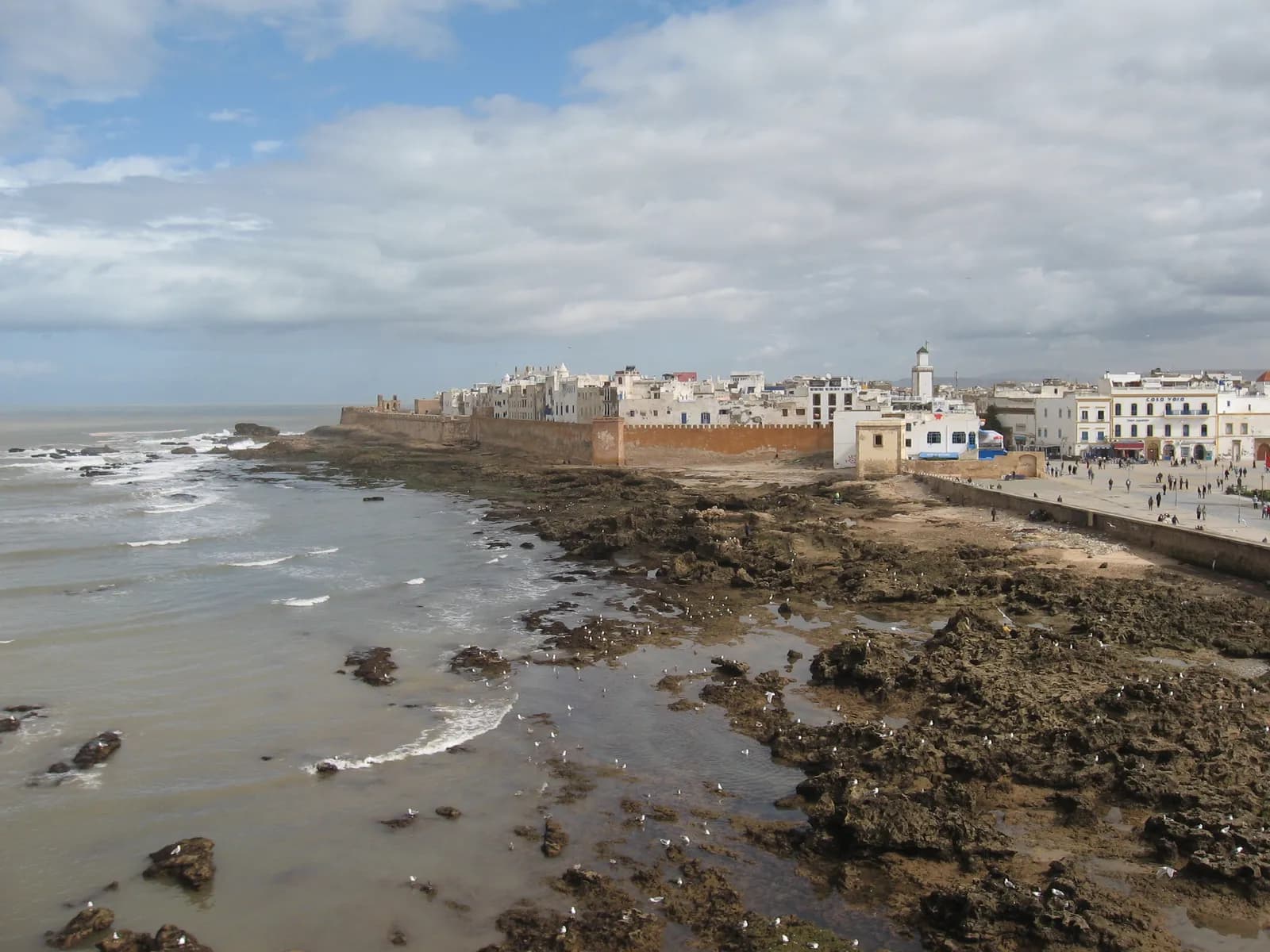
Essaouira comes in four blocks, and two days cover them. First the town inside its walls: the medina, the rampart walk on the skalas, the mellah, half a day on foot. Then the port, an hour, in the morning, while the boats are unloading. The beach, two hours at low tide. Then the surroundings, a full day: Diabat 5 km away, Sidi Kaouki 26 km, the argan cooperatives on the Ounagha road at 20 km, by road from Bab Doukkala. The museums and galleries are not a fifth block: they go in the hours when the wind blows.
One monument in town appears on the Ministry of Culture’s ticketing site, the Skala du Port. It costs 60 MAD for a foreign adult and 30 MAD for a Moroccan or resident adult (ticketing site read on 16 October 2026). The full price list is in our Landmarks section. The port, the beach and the medina lanes are public spaces. The cost of a visit is mostly lunch, and the taxi on day two.
What each sub-section covers
Six sub-sections carry the detail this page summarises. Landmarks & historic sites gives the prices and the walking order of the ramparts, the gates and the synagogues. Our Beaches pages say which beach works in which wind, and which one you can swim from. Museums & galleries says which venue is open, which is closed, and on what dated source. Our Itineraries cut one, two or three days into a plan, with a fallback for rain and strong wind. Must-see ranks, and says what is famous here without deserving your time. Crafts & shopping teaches you to tell solid thuya from veneer and a registered argan cooperative from a roadside stop before you buy.
This page answers the question that comes before all of those: what is there to see, where is it, and how long does each thing take.
Inside the walls: the medina, the ramparts, the mellah
Three quarters share the walls. The kasbah, to the south-west, around place Moulay Hassan and the Skala de la Ville. The medina proper, in the centre, with the souks and the shopping streets. The mellah, to the north, the old Jewish quarter, with two synagogues you can enter, Slat Lkahal and Bayt Dakira. The plan is a grid. Two main streets cross at the souks: if you lose your way, head back to one of them. The medina has been on the UNESCO World Heritage List since 2001, and the story of its walls is in our Landmarks section.
The walking itself is short. From Bab Doukkala to the Skala du Port, by way of the mellah, Bayt Dakira, the Skala de la Ville and place Moulay Hassan, the route is 1.7 km and 22 minutes on foot, by our route calculation. The rest of the half day goes on stops. The Skala de la Ville does not appear on the ministry’s ticketing site. The walking order and the best hours for the ramparts are in our Landmarks section. What each quarter is worth for sleeping or eating is in our neighbourhoods pages.
The port and the beach: mornings, before the wind
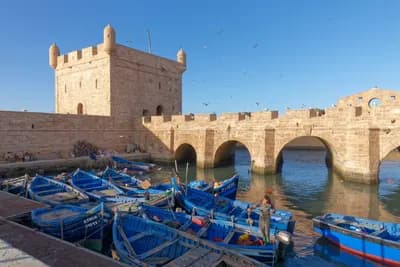
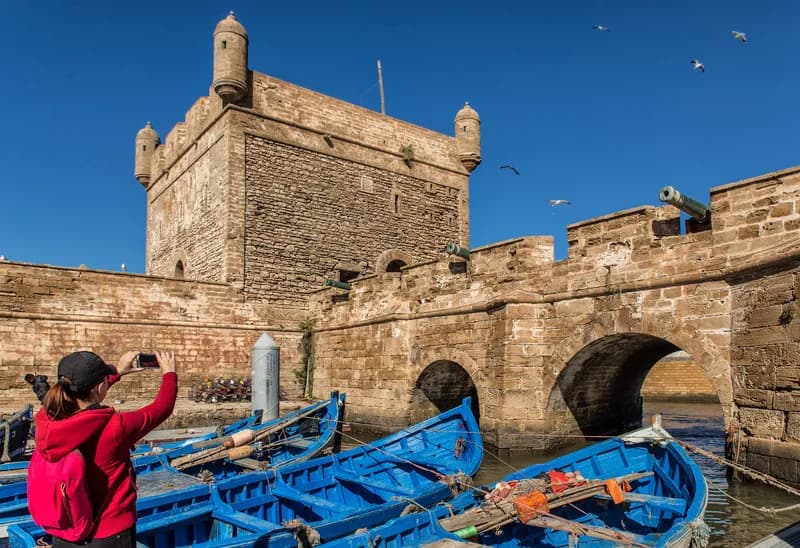
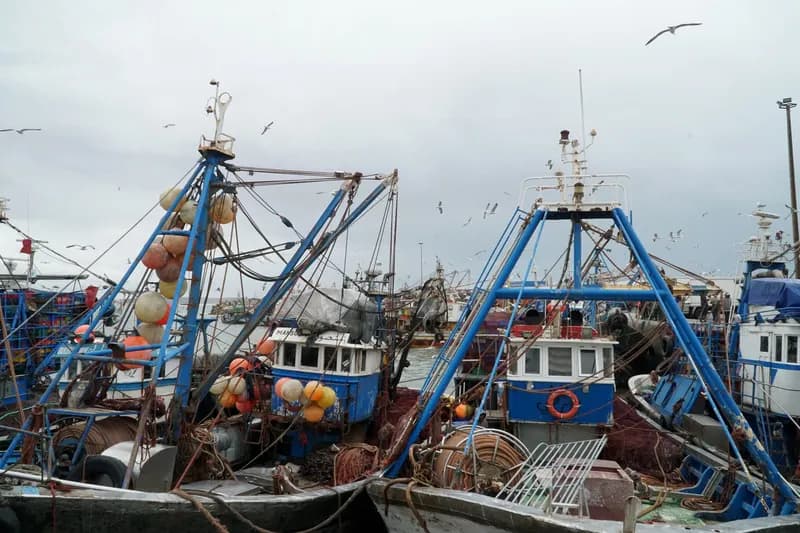
The port sits below the Skala du Port, at the south-west corner of the medina. It is a working fishing port, not a backdrop: blue boats, a shipyard, the fish auction, fish grilled on the quay. An hour is enough, and the morning is the hour that counts. By the afternoon the fish is sold and the boats are high and dry. Go in through the Porte de la Marine at the end of place Moulay Hassan, the one entrance you cannot miss.
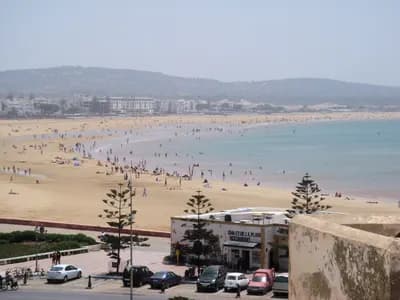
The bay beach starts at the foot of the ramparts and runs south to the dunes of Diabat. From place Moulay Hassan to Diabat is 4.3 km and an hour on foot, by our route calculation: two hours there and back at low tide, on the hard sand. It serves walkers, horses and kites better than towels. Which beach to choose for the day’s wind, where swimming is supervised and what the water is like is the job of our Beaches pages.
Outside the walls: the second day
Everything below needs a taxi, a car or a bus, and the driving times are in our distances from Essaouira. Diabat, 5 km south by road: the village, the dunes, the mouth of the Oued Ksob, half a day. You can also walk there along the seafront, an hour from place Moulay Hassan. Sidi Kaouki, 26 km south, and Moulay Bouzerktoune, 29 km north, are beaches for waves and wind. Our Beaches section says which to choose.
Inland, to the east, the Marrakech road passes the argan cooperatives around km 20, then the small town of Ounagha at 24 km. The Val d’Argan vineyard is at 28 km, 4 km north of the Ounagha roundabout. Our Crafts & shopping section shows how to tell a real cooperative from a roadside stop. The weekly country souk at Had Draa, 30 km away, is the outing we prefer when the calendar allows it. Imsouane, 99 km south and 1 h 35 by road without stops, is a whole day for a single wave. Our day-trips section says which you can do on your own and which to book through an agency.
Museums and galleries: the windy hours, and where things stand in 2026
The town’s only public museum, the Sidi Mohamed Ben Abdallah Museum, is closed, with no reopening date published as of 16 October 2026. An agreement to fit it out was signed in Rabat in April 2026, with no timetable. What you can visit instead: Bayt Dakira, Dar Souiri, the Institut français and the galleries. Our Museums & galleries section takes each venue in turn, with its sources. Allow half a day for the lot, best placed in the afternoon when the rampart walk turns unpleasant.
So the wind sets the order, not the list. Our wind pages give the day’s strength in knots and our when-to-visit guide says which month suits which plan. Our getting-around pages explain taxis and buses, and our budget pages price the day. With a single day, stay inside the walls and at the port: the Must-see pages say where to start.
Sub-sections
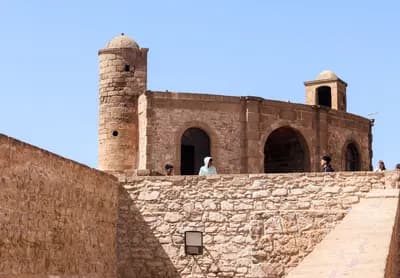
- Landmarks & historic sitesEssaouira’s landmarks are one 18th-century fortified enceinte, and half a day walks all of it. Only the Skala du Port charges: 60 MAD for a foreign adult, 30 MAD for a Moroccan adult or resident. The ramparts, the gates and the kasbah are free. Here is the order to walk them in.
- BeachesFive beaches, one deciding factor: the wind. The bay is for walking rather than sunbathing, Sidi Kaouki for surfing, Moulay Bouzerktoune for experienced riders. Cap Sim and Tafedna are emptiness at the end of a track. The water averages 17 to 19 °C by month, and the afternoons blow from April to September.
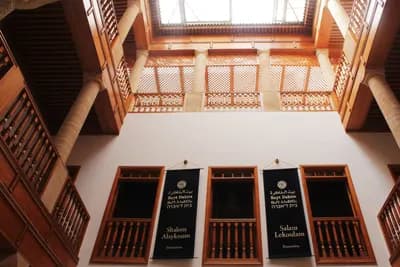
- Museums & galleriesEssaouira’s only public museum is closed, with no reopening date published as of 16 October 2026. None of the open venues publishes an entry fee: Bayt Dakira, Dar Souiri, the Institut français and the galleries of a painting born here in the 1980s. This section gives the status of every venue, open or closed, with its source.
- ItinerariesTwo days is enough. Day one on foot: medina, skalas and port. Day two outside the walls, at Diabat (5 km) or Sidi Kaouki (26 km by road). One day if you stay in town, three with a booked activity or the Had Draa souk. Plus a fallback plan for rain and windy days.
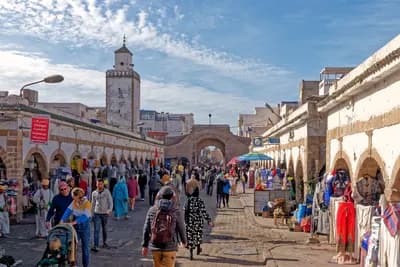
- Must-seeThree things first: the Skala de la Ville ramparts, the port in the morning, the medina crossed without a map. Half a day on foot, no ticket. Day two goes outside the walls, and we say plainly what is famous in Essaouira and not worth the detour.
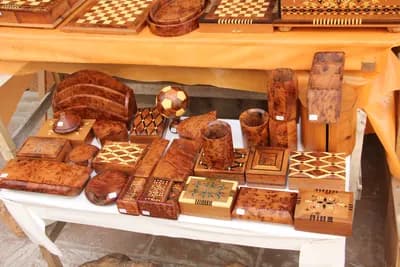
- Crafts & shoppingEssaouira really makes five things: thuya marquetry, argan oil, raffia, silver and painting. How to tell solid wood from veneer and a registered cooperative from a roadside stall, how to haggle, and what the law forbids you to take out of the country.
Pages in this section
Beach
Plage d’Essaouira
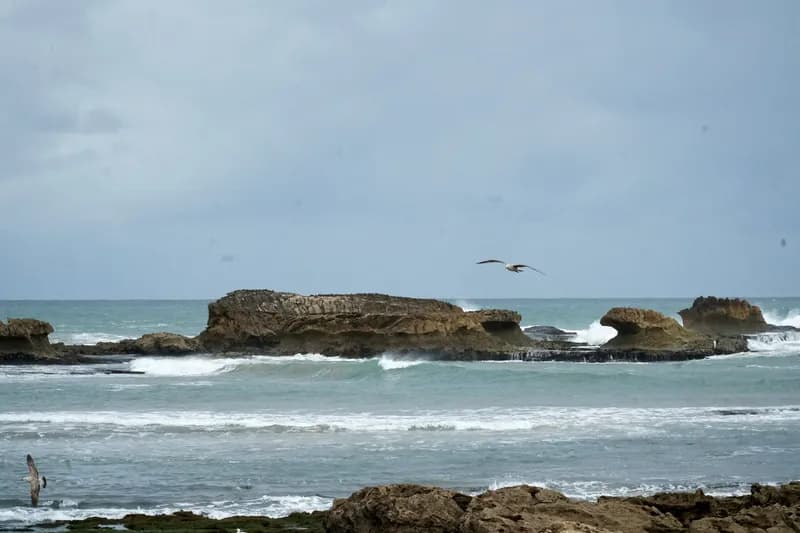
You can swim at Essaouira beach, but the water is cold: 18.1 °C on average in July and 19.4 °C in October, by our calculation. The Blue Flag went up in July 2026. Swim at the medina end, north of the kite schools, in the morning before the trade wind. No official source publishes lifeguard hours.
Essaouira bay (beach)
Museum
Bayt Dakira, Maison de la mémoire
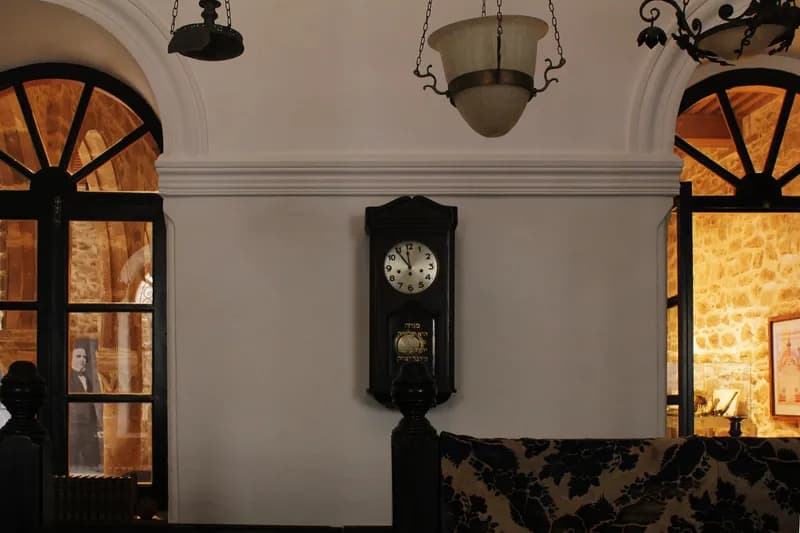
Bayt Dakira, the House of Memory, fills the former Slat Attia synagogue on rue Ziry Ibn Atiyah. It drew just over 120,000 visitors in 2025, according to André Azoulay. No official hours or price had been published as of 17 October 2026: ring the association that runs it, at Dar Souiri, on +212 524 475 268.
Mellah
Landmark
Skala du Port
Skala du Port entry: 60 MAD for a foreign adult, 30 MAD for a foreign child aged 7 to 13. Moroccans and residents pay 30 and 10 MAD, and Moroccans get in free on Fridays (Ministry of Culture, read 17 October 2026). No hours are published for the site itself: the portal gives 09:00–17:00 for all its sites.
Port
Landmark
Skala de la Ville
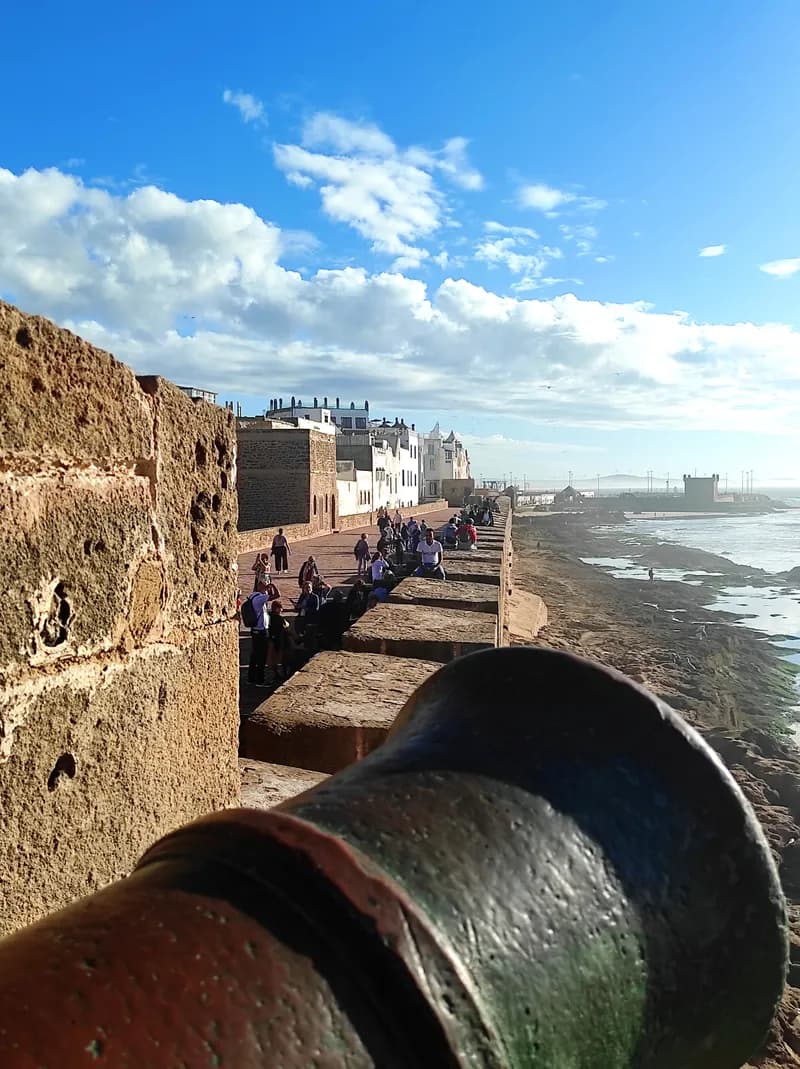
The Skala de la Ville, the gun terrace on the medina’s north-west edge, publishes no hours and no price. The 60 MAD ticket on the culture ministry’s portal is for the Skala du Port only. The sun sets there at 17:40 on 21 December and 19:47 on 21 June, GMT.
Kasbah
Landmark
Médina d’Essaouira (site UNESCO)
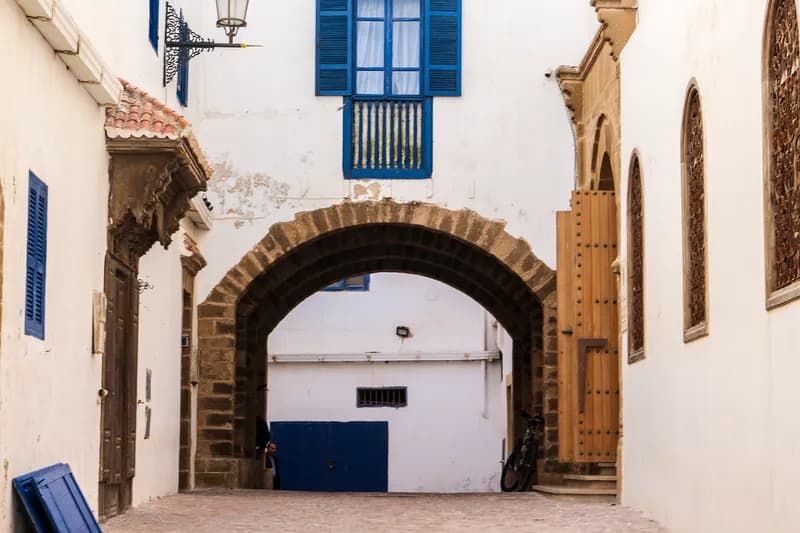
Essaouira’s medina has been on UNESCO’s World Heritage List since December 2001 (property no. 753, criteria (ii) and (iv)). The property covers 56.7 ha in two parts, the medina and the islands. UNESCO listed its 18th-century fortified port plan. In 2025 the Committee raised concern over the Mellah and asked Morocco for a report by 1 December 2026.
Medina
Landmark
Port de pêche d’Essaouira
Essaouira’s fishing port is a workplace, not a visitor site: the National Ports Agency publishes no hours and no ticket for it. It landed 4,572 tonnes from January to the end of April 2026, up 26% year on year (ONP). No official source gives the time of the fish auction. Our advice: an hour, in the morning.
Port
Beach
Plage de Sidi Kaouki
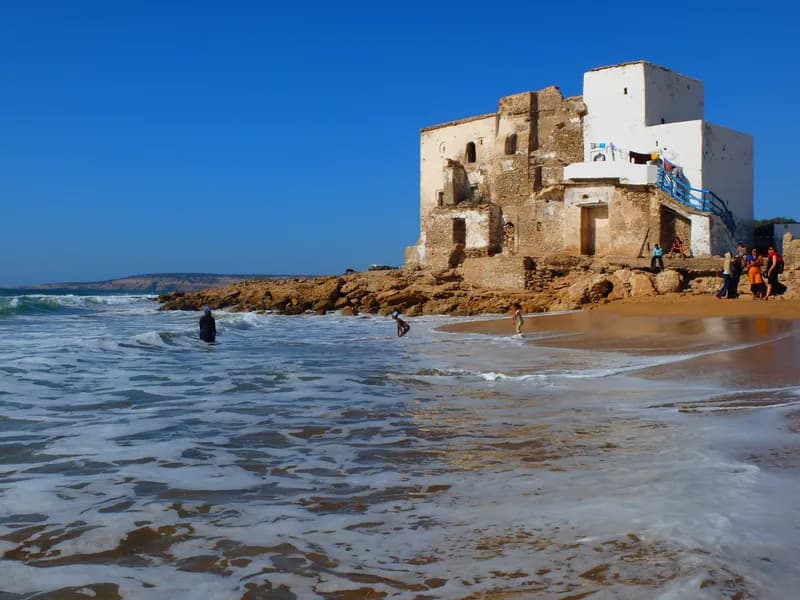
Sidi Kaouki beach starts at the saint’s white shrine and runs south for 2.3 km of open sand. The “Marabout” peak just below the shrine suits all levels depending on wave size. Swimming is not advised: there are currents along the sand and no published lifeguard post. Access is free.
Sidi Kaouki
Beach
La baie d’Imsouane
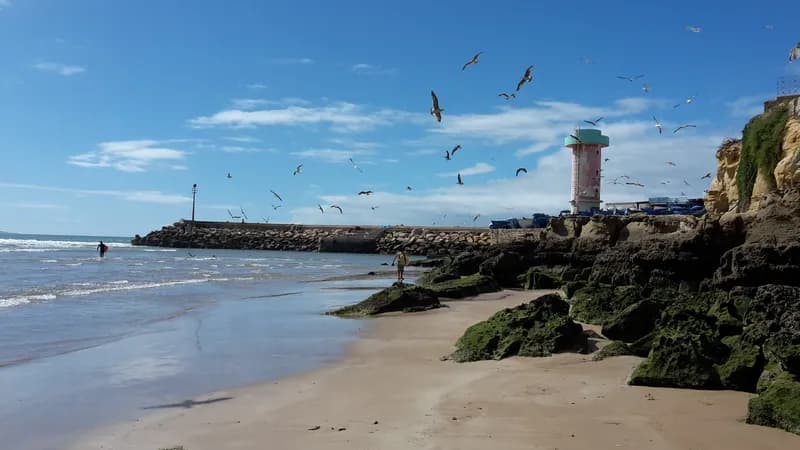
Imsouane Bay’s right-hander starts at the harbour wall and runs over sand. Its length made its name, yet no measurement has ever been published. From 2016 to 2025, the swell tops 2 m in 65% of February hours and a third of October ones. Access is free.
Imsouane
Beach
Plage de Moulay Bouzerktoune
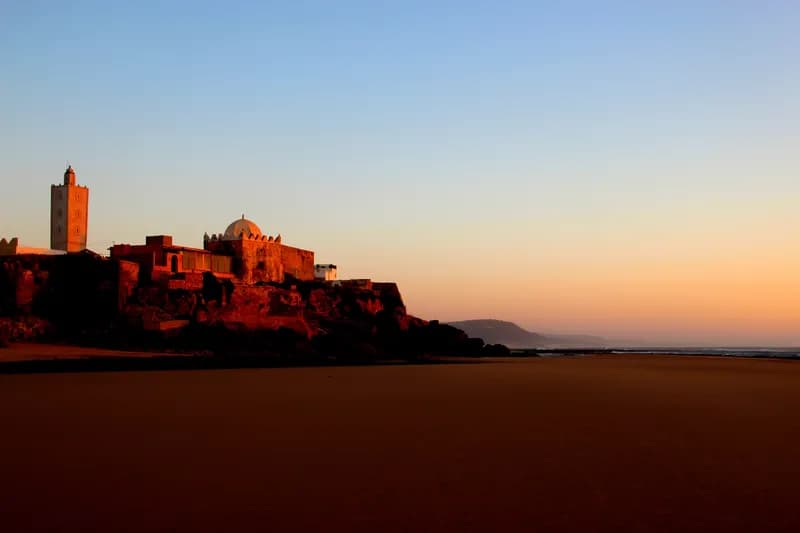
A cove of sand about 160 m long, facing the rock slab where the windsurfers’ right-hand wave breaks. It is a launch for experienced sailors and a grandstand for everyone else, not a swimming beach. Come from March to June, when the swell builds, or for the Wave Classic, 24 April to 1 May 2027.
Moulay Bouzerktoune
Landmark
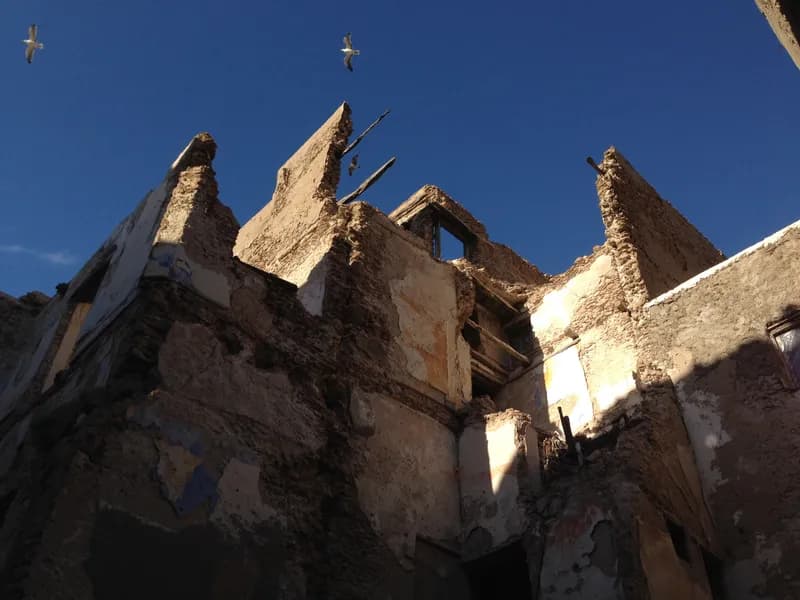
Mellah d’Essaouira
The Mellah, the former Jewish quarter in the north of the medina, dates from 1804 and Sultan Moulay Slimane, according to the town’s 2012 map-guide. In 2025 UNESCO voiced concern at its decay and asked Morocco for a rehabilitation strategy, reporting by 1 December 2026. No plan for its houses had been published by 16 October 2026.
Mellah
Landmark
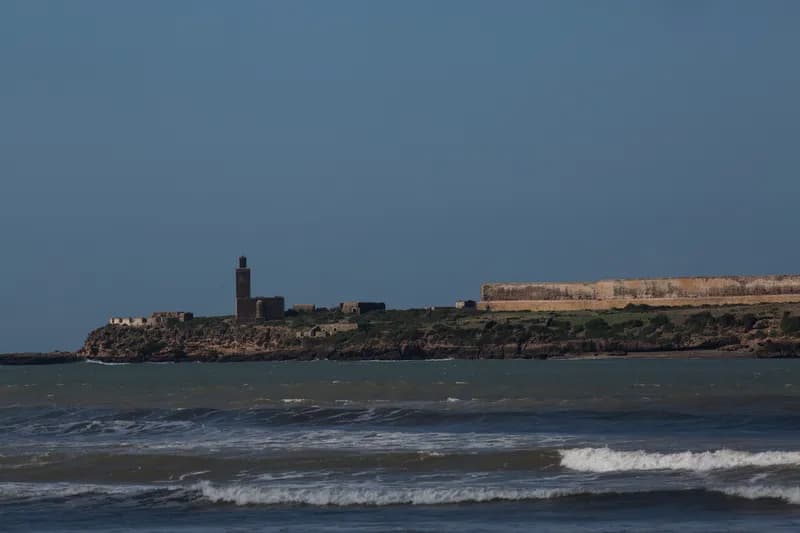
Île de Mogador
Mogador Island is closed to visitors. A permanent biological reserve since 1980, it bars all landings except by a few registered fishermen. You watch it from the Skala du Port, 1.9 km away as the crow flies, or from the beach. Around 1,500 pairs of Eleonora’s falcons breed there each summer (GREPOM, 2018–2021).
Essaouira bay (beach)
Landmark
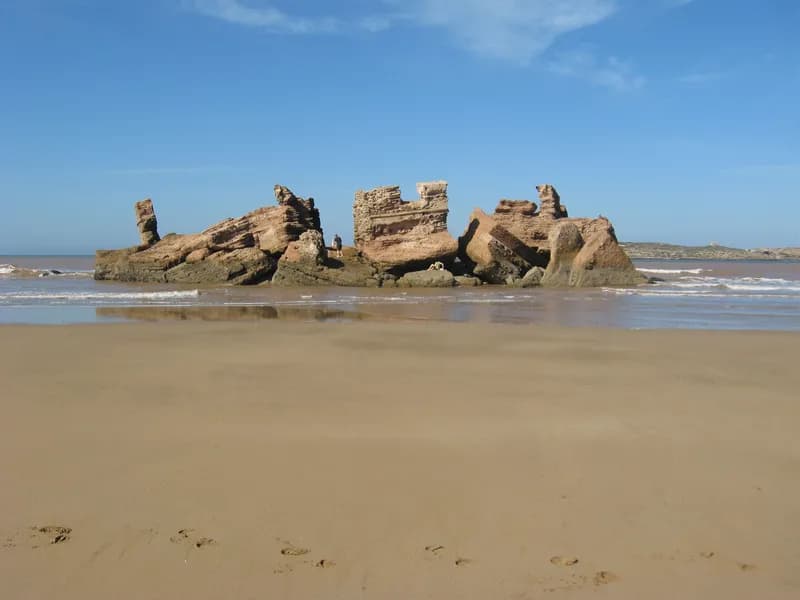
Diabat, le village et le Bordj El Berod
Bordj El Berod, Borj Al-Baroud in the culture ministry’s inventory, is a ruined 18th-century fort on the beach at Diabat. It stands 1.4 km from the village as the crow flies, facing Mogador island. Legend says Jimi Hendrix wrote “Castles Made of Sand” here, yet the song came out before his 1969 visit.
Diabat
Cooperative
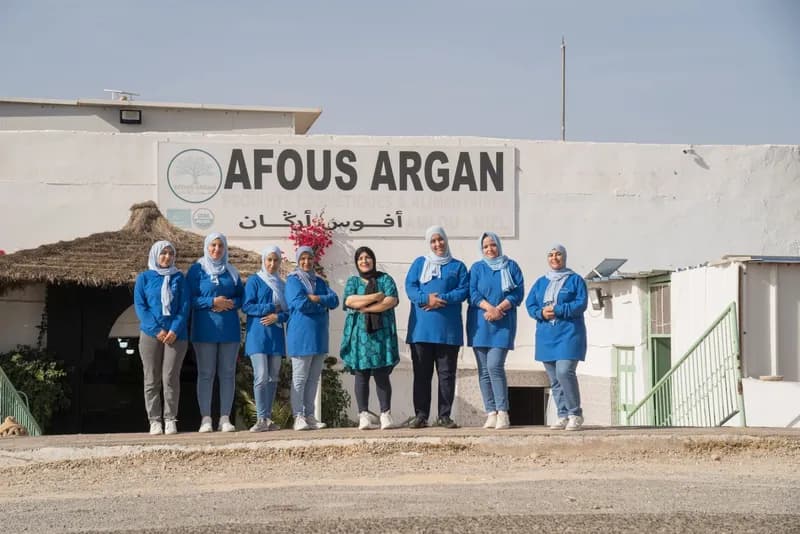
Coopératives d’argan de la route d’Ounagha
Around km 20 of the N8, 20 km from Essaouira, two argan shops are mapped as cooperatives. The only one with a website, Afous Argan, presents itself there as a company and a brand. No online register says who is registered: ODCO answers on 05 37 77 10 33. Allow 30 to 45 minutes for the stop.
Ounagha & Val d’Argan
Museum
Centre d’Interprétation du Patrimoine d’Essaouira
Essaouira’s Heritage Interpretation Centre opened on 22 November 2023 at the Bab Sbaa gate, on avenue du Caire, a 5-minute walk from Place Moulay Hassan. Paid for by SMIT, it tells the story of the medina, its traditions and crafts. As of 17 October 2026, neither the operator nor SMIT publishes opening hours or a price.
Kasbah
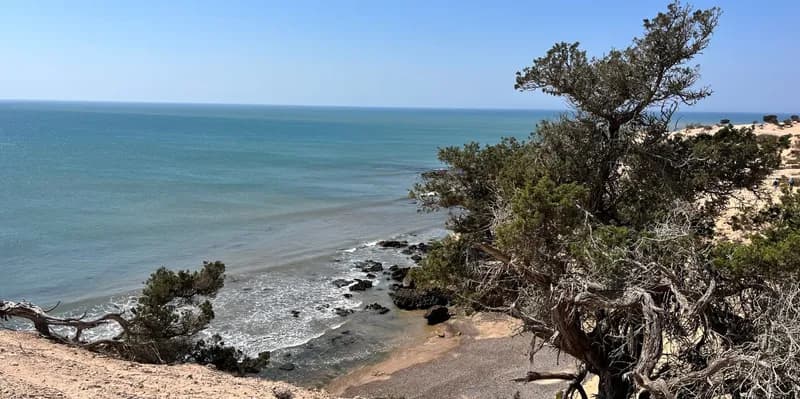
Beach
Cap Sim
At Cap Sim you find a working lighthouse and Ramsar-listed dunes, 14.6 km south of Essaouira as the crow flies. By road it is 28.9 km and 50 minutes via Sidi Kaouki, including 3.3 km of track. From April to September the wind builds in the afternoon, so be on the point before 11:00.
Diabat
Landmark
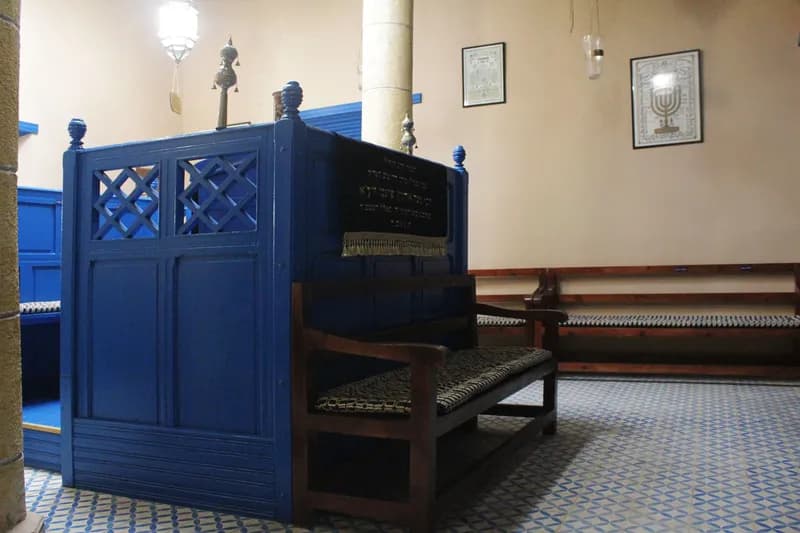
Synagogue Haïm Pinto
The Haïm Pinto synagogue is in the rabbi’s former house in the mellah, 60 m from Slat Lkahal. As of 17 October 2026, nobody publishes its opening hours or a price. Save its coordinates before you set off: 31.515953, −9.767328. The next hiloula, on 26 Elul, falls on 28 September 2027.
Mellah
Landmark
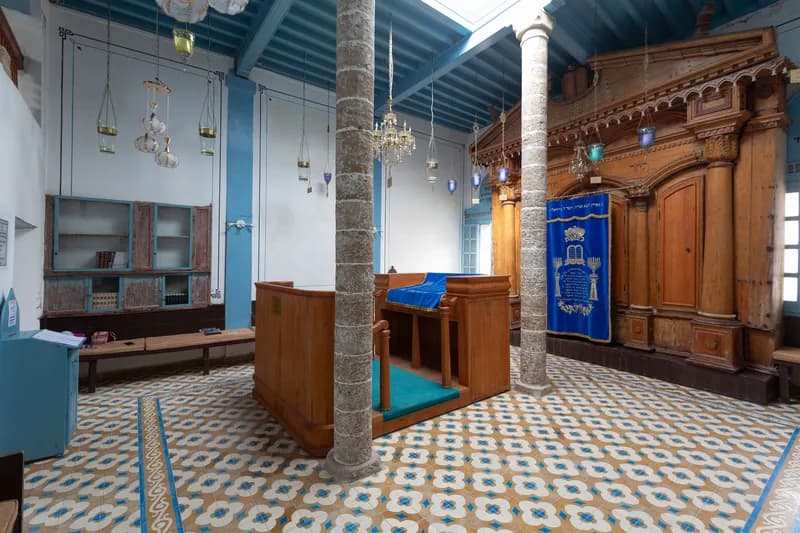
Synagogue Slat Lkahal
Slat Lkahal, the community synagogue, has stood over a vaulted passage since the 1850s, at number 119 on the mellah’s main street, 3 minutes’ walk from Bab Doukkala. The association that has been restoring it since 2011 publishes no hours and no prices, so write to it before you go.
Mellah
Landmark
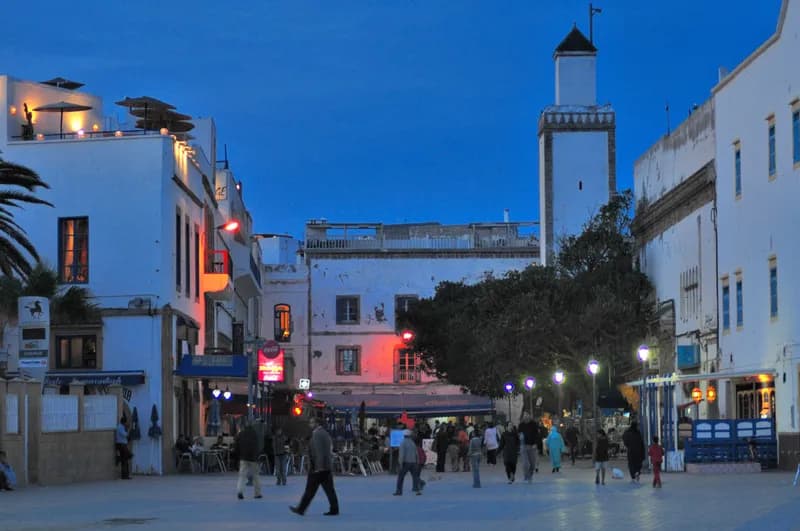
Place Moulay Hassan
Place Moulay Hassan is the pedestrian square between Essaouira’s medina and its port, free and open at any hour. Terraces line it, and the Skala du Port is 250 m away on foot. In late June it holds the Gnaoua Festival’s main stage: the 2026 edition opened on 25 June, and the next runs 24 to 26 June 2027.
Kasbah
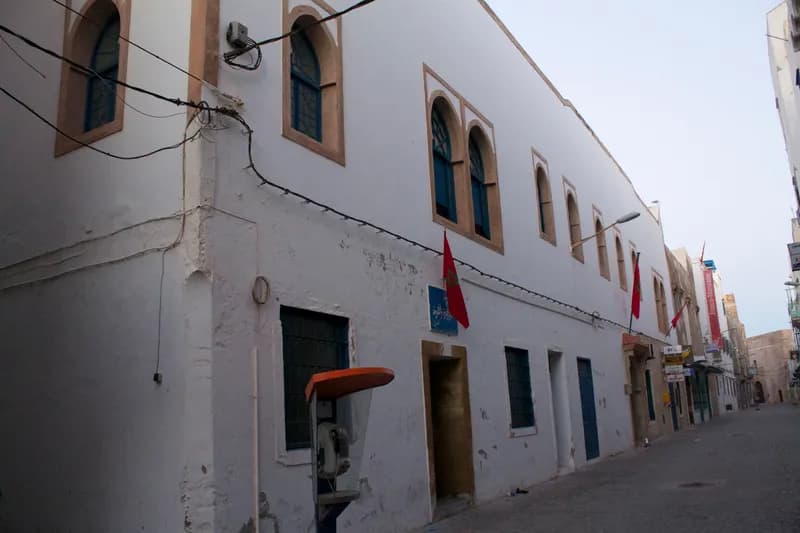
Museum
Musée Sidi Mohamed Ben Abdallah
The Sidi Mohamed Ben Abdallah Museum on rue Laâlouj is closed, with no reopening date published as of 17 October 2026. An agreement covering its refit, equipment and management was signed in Rabat on 13 April 2026, with no schedule. Neither the National Museums Foundation nor the ministry’s ticket portal offers it.
Medina
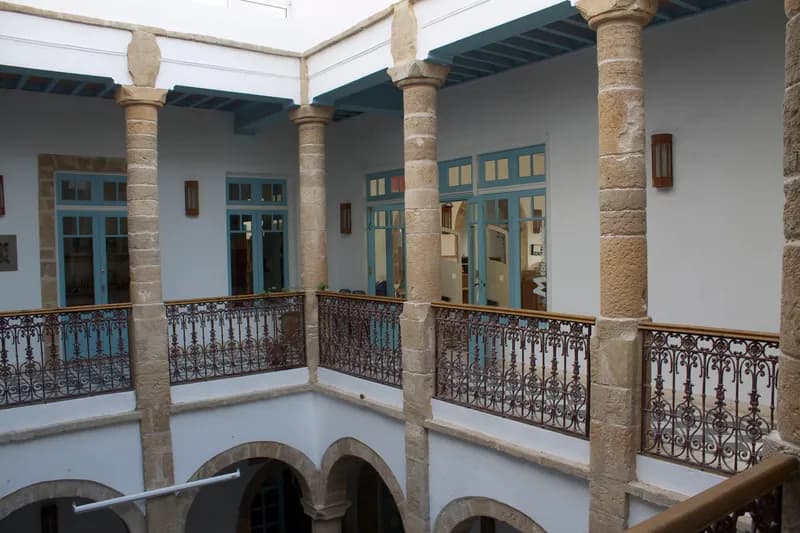
Art gallery
Institut français d’Essaouira
The Institut français d’Essaouira sits at 9 rue Mohamed Diouri, derb Lâalouj, inside the medina. Exhibitions, cinema, concerts and French classes, Tuesday to Saturday, 09:30–12:30 and 14:30–19:00. The library opens Wednesday to Saturday. Every event announced for 2026 is free.
Medina
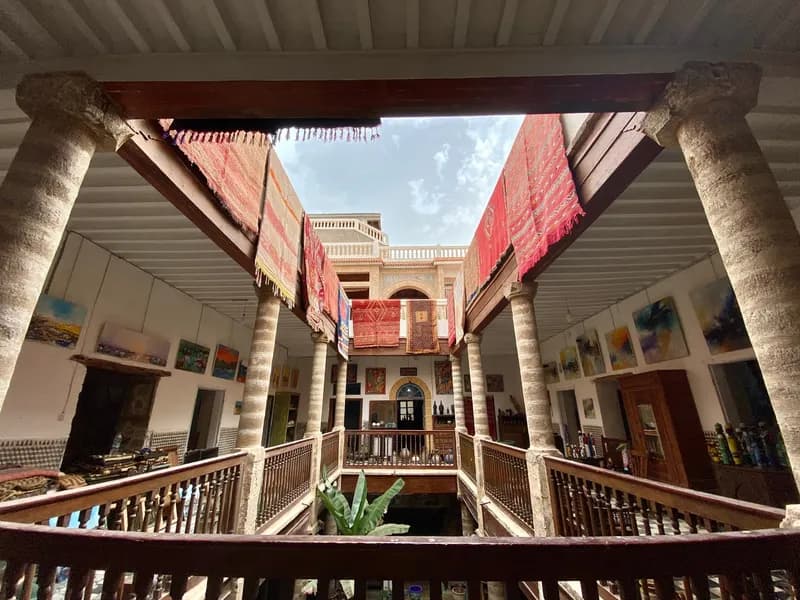
Art gallery
Galerie La Kasbah
Galerie La Kasbah shows painting, sculpture and calligraphy in a restored riad at 4 rue Tétouan, inside the Essaouira medina. Its website gives 09:00–21:00, Monday to Sunday, and about a hundred artists, Houssein Miloudi and Fatna Gbouri among them. No admission price is published. Its last dated exhibition closed in January 2017, so ring before you go.
Medina
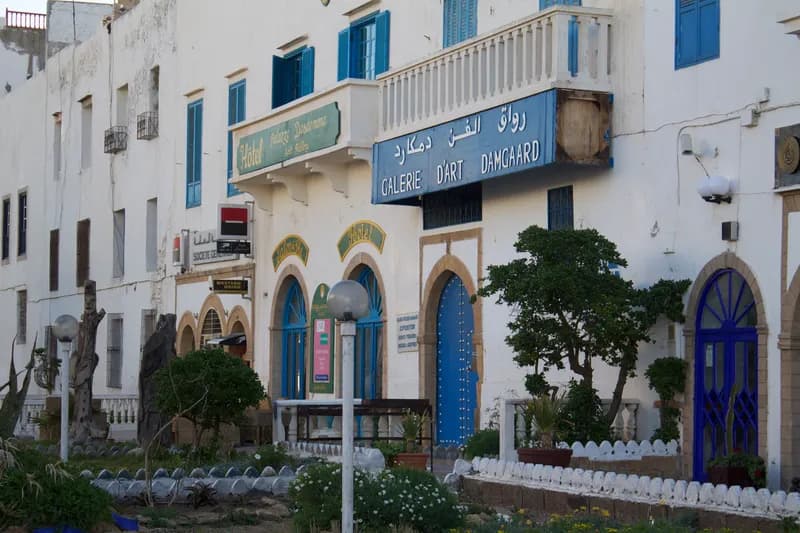
Art gallery
Galerie d’Art Frédéric Damgaard
The Frédéric Damgaard gallery on avenue Oqba Ibn Nafiaa is Essaouira’s first art gallery according to the MAP news agency, opened in the 1980s for the town’s self-taught painters. Its website has not shown the gallery since late 2021, and nobody publishes its hours or prices. Check it is open before you cross the medina.
Medina
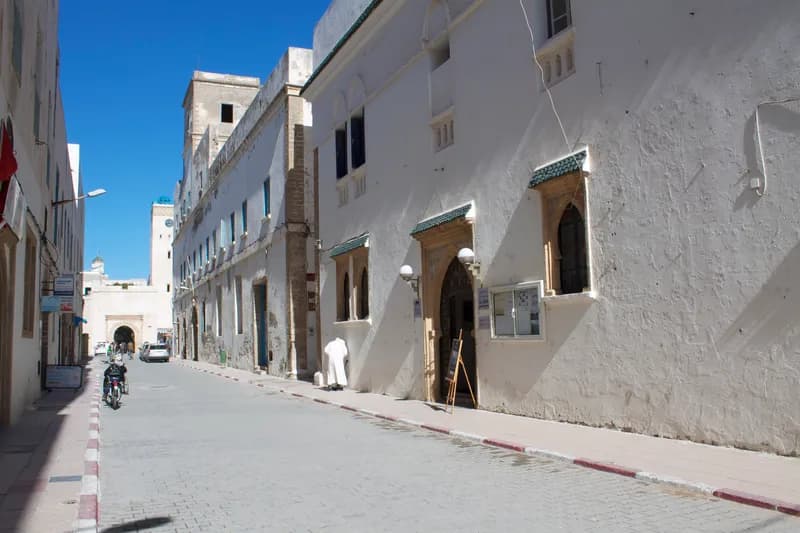
Art gallery
Dar Souiri
Dar Souiri, at 10 rue du Caire, is Essaouira’s cultural house: exhibitions, concerts, a film club, talks and Arabic and Spanish classes. The Association Essaouira-Mogador, founded in 1992 by André Azoulay, has its headquarters here. No official opening hours are published. Ring +212 524 475 268 to find out what is on.
Medina
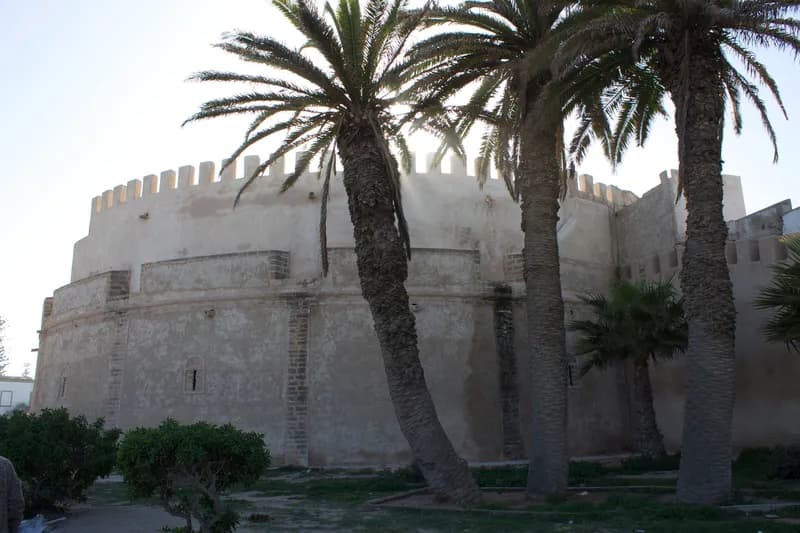
Art gallery
Bastion Borj Bab Marrakech
Borj Bab Marrakech, a rampart tower beside the Bab Marrakech gate, publishes no hours and no calendar. It hosts temporary exhibitions and, during the Gnaoua Festival, ticketed concerts: 300 MAD a night on 26 and 27 June 2026. Outside the festival, treat it as closed unless a poster at the gate says otherwise.
Medina
Frequently asked questions
What is there to see in Essaouira?
The medina inside its ramparts, with the walk along the two skalas and the synagogues of the mellah. The fishing port, in the morning. The bay beach, at low tide. Then, on the second day, Diabat, Sidi Kaouki or the argan cooperatives. Museums and galleries fill the windy hours.
How much does it cost to visit Essaouira?
One Essaouira monument appears on the Ministry of Culture’s ticketing site, the Skala du Port: 60 MAD for a foreign adult, 30 MAD for a Moroccan or resident adult (read on 16 October 2026). The port, the beach and the medina lanes are public spaces. Prices in full are in our Landmarks section.
Can you see Essaouira on foot?
Yes, entirely, on the first day. The medina, the ramparts, the port and the beach are all within half an hour’s walk of each other, and no car enters the walls. You only need a taxi, a bus or a car for the villages and beaches around.
What is there to see around Essaouira?
To the south, Diabat and its dunes at 5 km, Sidi Kaouki and its surf beach at 26 km, Imsouane at 99 km and 1 h 35. To the north, Moulay Bouzerktoune at 29 km, for boards. To the east, the argan cooperatives on the Ounagha road at 20 km, the Val d’Argan vineyard at 28 km and the weekly souk at Had Draa at 30 km. Distances are by road from Bab Doukkala. One outing a day, no more.
Is the port worth a visit?
Yes. It is a working fishing port, with blue boats, a shipyard and fish grilled on the quay. An hour is enough, in the morning, while the boats unload. By the afternoon the fish is sold and the boats are high and dry.