Itineraries
Two days is enough. Day one on foot: medina, skalas and port. Day two outside the walls, at Diabat (5 km) or Sidi Kaouki (26 km by road). One day if you stay in town, three with a booked activity or the Had Draa souk. Plus a fallback plan for rain and windy days.
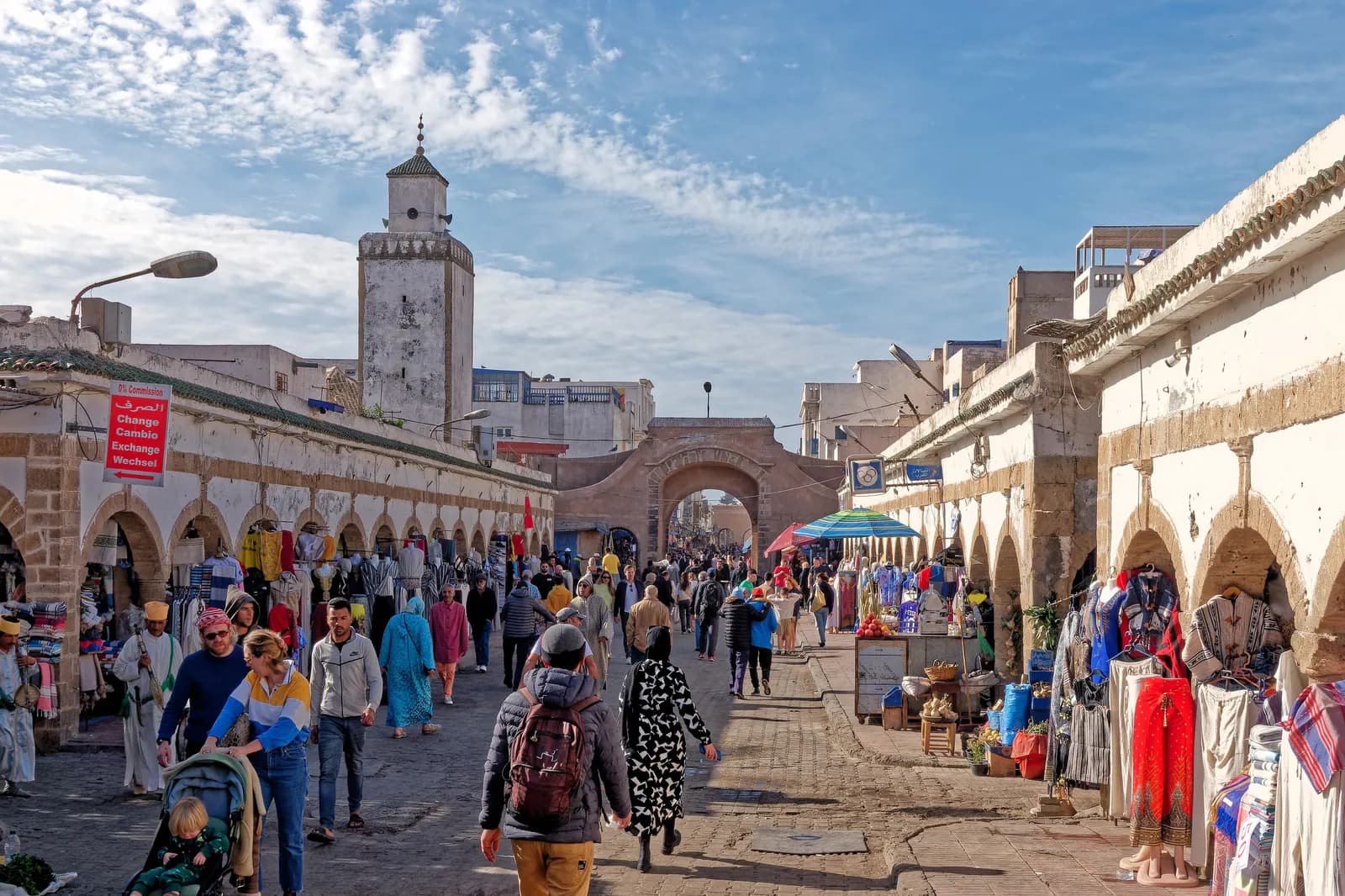
Two days is enough to see Essaouira without rushing. Day one stays inside the walls and on foot. The port and the beach in the morning, the medina next, the skalas at the end of the day. Day two goes out: Diabat, Sidi Kaouki or the hinterland towards Ounagha. With one day, keep day one and leave the car alone. With three, take whatever the calendar hands you: the weekly souk at Had Draa, an argan cooperative, half a day on the water.
The plans below give the order of the stops rather than a timetable. They assume you are sleeping in the medina or ten minutes’ walk from it, which is where most riads are. They also assume the walking is part of the itinerary.
The wind sets the order, not the list
The real question here is not what to see but in which order. The wind gets up late in the morning and blows hardest in the afternoon. From April to September it reaches 15 knots 12% of the time at 06:00, and 40 to 43% of the time from 14:00 to 17:00, by our calculation over ten years of hourly data. Our When to visit guide has the month by month.
Our rule fits on one line: beach, port and long walks in the morning, lanes, museums and shops once it blows. Do it the other way round and you will be squinting into the sand by 16:00. Kitesurfers aim for exactly the window walkers avoid. The spot-by-spot forecast is in our wind section.
One day, two days, three days
One day: the port and the beach in the morning, at low tide if you can. Then the medina and Place Moulay Hassan, and the Skala de la Ville at the end of the day. Five to six hours of walking with two stops, our estimate.
Two days: that same day, then one trip out. Diabat and the mouth of the Oued Ksob fill half a day. Sidi Kaouki takes a whole one, lunch on the spot included. Three days: the third day does not fill itself. It is the one where we would book something ahead, a class, a day trip or a boat, rather than walking the medina twice.
Rain, strong wind, children
It rains little, and almost never outside winter, with the monthly detail in When to visit. A washed-out morning still happens between November and February, and the fallback is short: museums and galleries, a hammam, a cooking class, a long lunch in the medina.
Strong wind shuts more things than rain does. The boats stay in, the beach turns hostile, the terraces empty. That is a day for the indoor itineraries, not for the drive to Sidi Kaouki. With children, halve the number of stops and start with the port: blue boats and the fish auction hold attention better than three museums.
Every plan points at the pages that carry the detail. Landmarks and historic sites for the walking order and prices, beaches for the state of the sea, museums and galleries for the status of each venue. Crafts and shopping for the souks, our neighbourhoods for where to sleep, and distances for journey times.
Frequently asked questions
How many days do you need in Essaouira?
Two. The first on foot in the medina, on the skalas and at the port. The second outside the walls, at Diabat (5 km) or Sidi Kaouki (26 km), by road from Bab Doukkala. A third day only earns its place if you book an activity or if your stay takes in Had Draa’s souk day.
What can you do in Essaouira in one day?
The port and the beach in the morning, then the medina and Place Moulay Hassan, and the Skala de la Ville at the end of the day. Five to six hours of walking, our estimate, with no car and nothing booked.
How do you adapt a plan in Essaouira when it rains or the wind is too strong?
Keep the port, the beach and the long walks for the morning, before the wind. Leave the lanes, the shops and the indoor places for the afternoon. The indoor venues, and which of them are open, are in our Museums & galleries section. Wind gets in the way more often than rain, which falls in four winter months.
Can you visit Essaouira without a car?
Yes for the town: the whole one-day itinerary is walkable inside the ramparts. For Sidi Kaouki, Diabat or Had Draa, a grand taxi from Bab Doukkala replaces the car, and the journey times are in our distances section.
Which itinerary works with children?
Halve every plan, start with the port, keep the beach, and swap the second museum for a break. The Skala de la Ville ramparts and the blue boats hold attention far longer than an exhibition room.
This section is filling up
No page is online in this section yet. In the meantime, here is what is already published in “Visit”.
Other sections in Visit
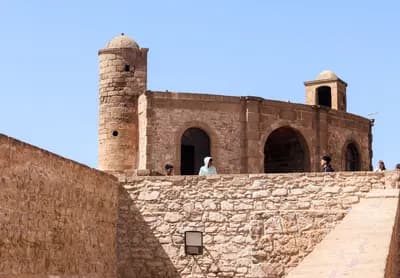
- Landmarks & historic sitesEssaouira’s landmarks are one 18th-century fortified enceinte, and half a day walks all of it. Only the Skala du Port charges: 60 MAD for a foreign adult, 30 MAD for a Moroccan adult or resident. The ramparts, the gates and the kasbah are free. Here is the order to walk them in.
- BeachesFive beaches, one deciding factor: the wind. The bay is for walking rather than sunbathing, Sidi Kaouki for surfing, Moulay Bouzerktoune for experienced riders. Cap Sim and Tafedna are emptiness at the end of a track. The water averages 17 to 19 °C by month, and the afternoons blow from April to September.
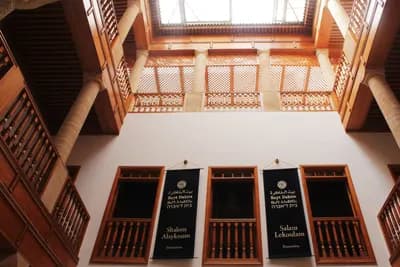
- Museums & galleriesEssaouira’s only public museum is closed, with no reopening date published as of 16 October 2026. None of the open venues publishes an entry fee: Bayt Dakira, Dar Souiri, the Institut français and the galleries of a painting born here in the 1980s. This section gives the status of every venue, open or closed, with its source.
- Must-seeThree things first: the Skala de la Ville ramparts, the port in the morning, the medina crossed without a map. Half a day on foot, no ticket. Day two goes outside the walls, and we say plainly what is famous in Essaouira and not worth the detour.
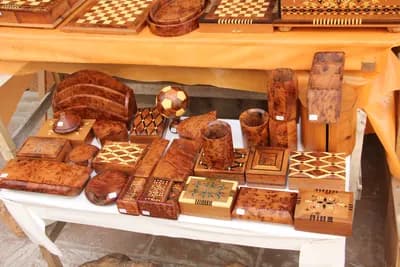
- Crafts & shoppingEssaouira really makes five things: thuya marquetry, argan oil, raffia, silver and painting. How to tell solid wood from veneer and a registered cooperative from a roadside stall, how to haggle, and what the law forbids you to take out of the country.
Already published in Visit
Beach
Plage d’Essaouira
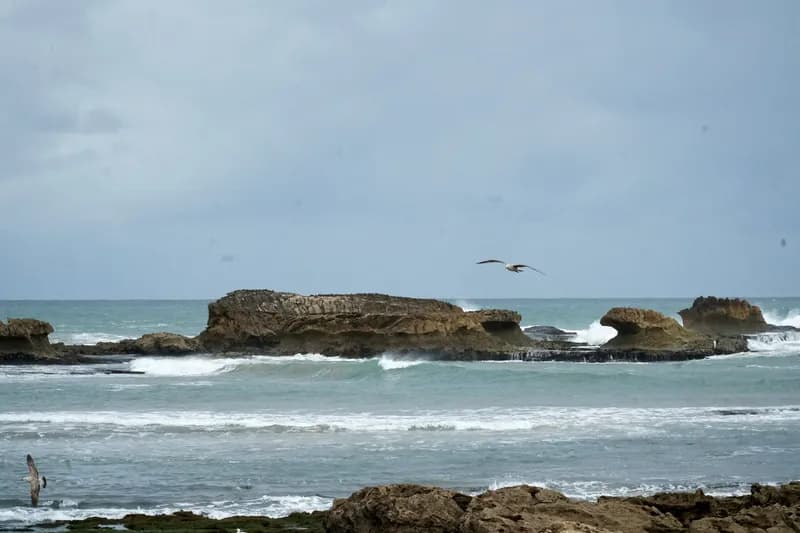
You can swim at Essaouira beach, but the water is cold: 18.1 °C on average in July and 19.4 °C in October, by our calculation. The Blue Flag went up in July 2026. Swim at the medina end, north of the kite schools, in the morning before the trade wind. No official source publishes lifeguard hours.
Essaouira bay (beach)
Museum
Bayt Dakira, Maison de la mémoire
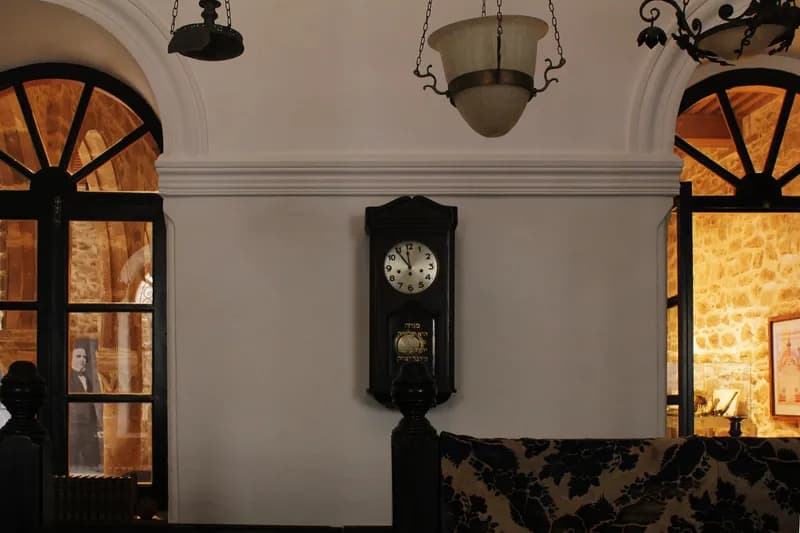
Bayt Dakira, the House of Memory, fills the former Slat Attia synagogue on rue Ziry Ibn Atiyah. It drew just over 120,000 visitors in 2025, according to André Azoulay. No official hours or price had been published as of 17 October 2026: ring the association that runs it, at Dar Souiri, on +212 524 475 268.
Mellah
Landmark
Skala du Port
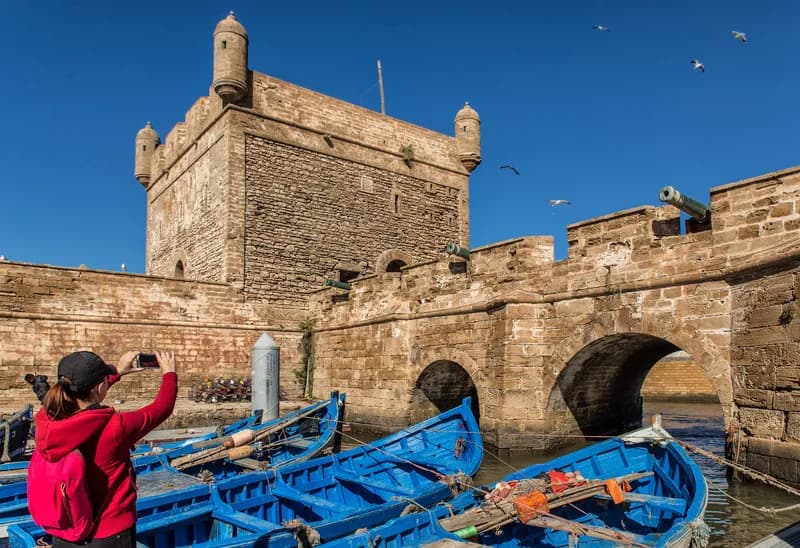
Skala du Port entry: 60 MAD for a foreign adult, 30 MAD for a foreign child aged 7 to 13. Moroccans and residents pay 30 and 10 MAD, and Moroccans get in free on Fridays (Ministry of Culture, read 17 October 2026). No hours are published for the site itself: the portal gives 09:00–17:00 for all its sites.
Port
Landmark
Skala de la Ville
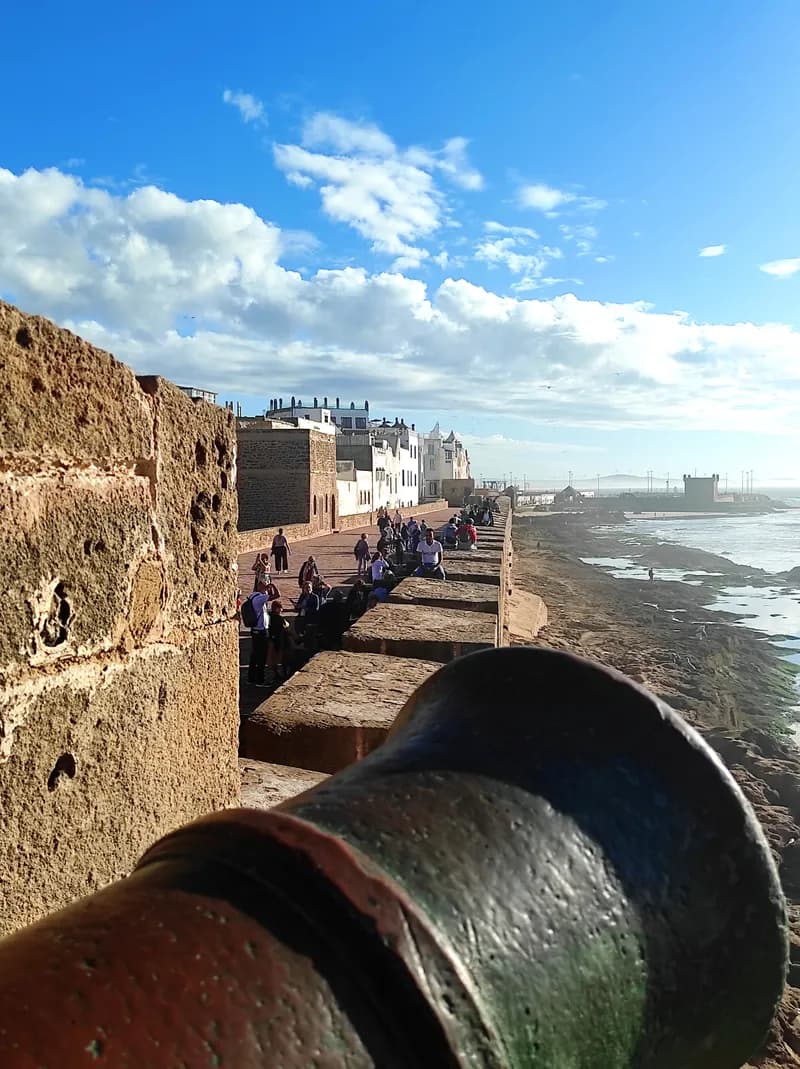
The Skala de la Ville, the gun terrace on the medina’s north-west edge, publishes no hours and no price. The 60 MAD ticket on the culture ministry’s portal is for the Skala du Port only. The sun sets there at 17:40 on 21 December and 19:47 on 21 June, GMT.
Kasbah
Landmark
Médina d’Essaouira (site UNESCO)
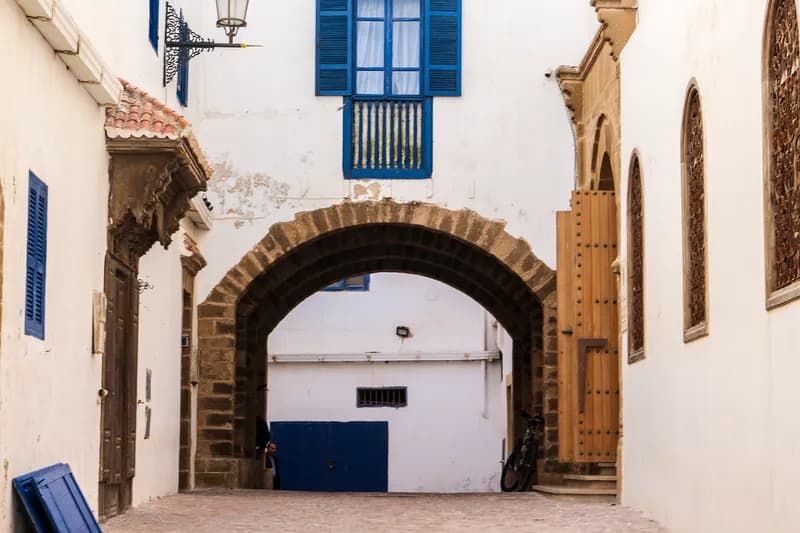
Essaouira’s medina has been on UNESCO’s World Heritage List since December 2001 (property no. 753, criteria (ii) and (iv)). The property covers 56.7 ha in two parts, the medina and the islands. UNESCO listed its 18th-century fortified port plan. In 2025 the Committee raised concern over the Mellah and asked Morocco for a report by 1 December 2026.
Medina
Landmark
Port de pêche d’Essaouira
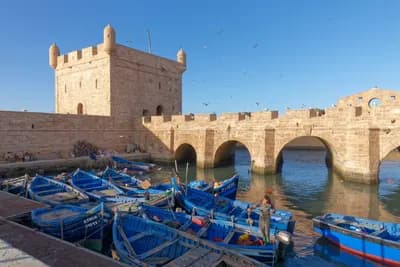
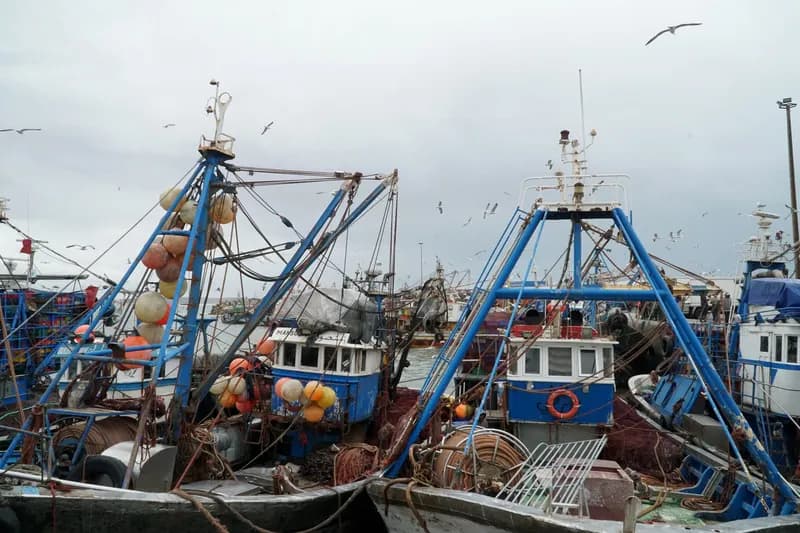
Essaouira’s fishing port is a workplace, not a visitor site: the National Ports Agency publishes no hours and no ticket for it. It landed 4,572 tonnes from January to the end of April 2026, up 26% year on year (ONP). No official source gives the time of the fish auction. Our advice: an hour, in the morning.
Port
The agenda and the wind, every month
One email a month, and you will know when this section opens.