Landmarks & historic sites
Essaouira’s landmarks are one 18th-century fortified enceinte, and half a day walks all of it. Only the Skala du Port charges: 60 MAD for a foreign adult, 30 MAD for a Moroccan adult or resident. The ramparts, the gates and the kasbah are free. Here is the order to walk them in.
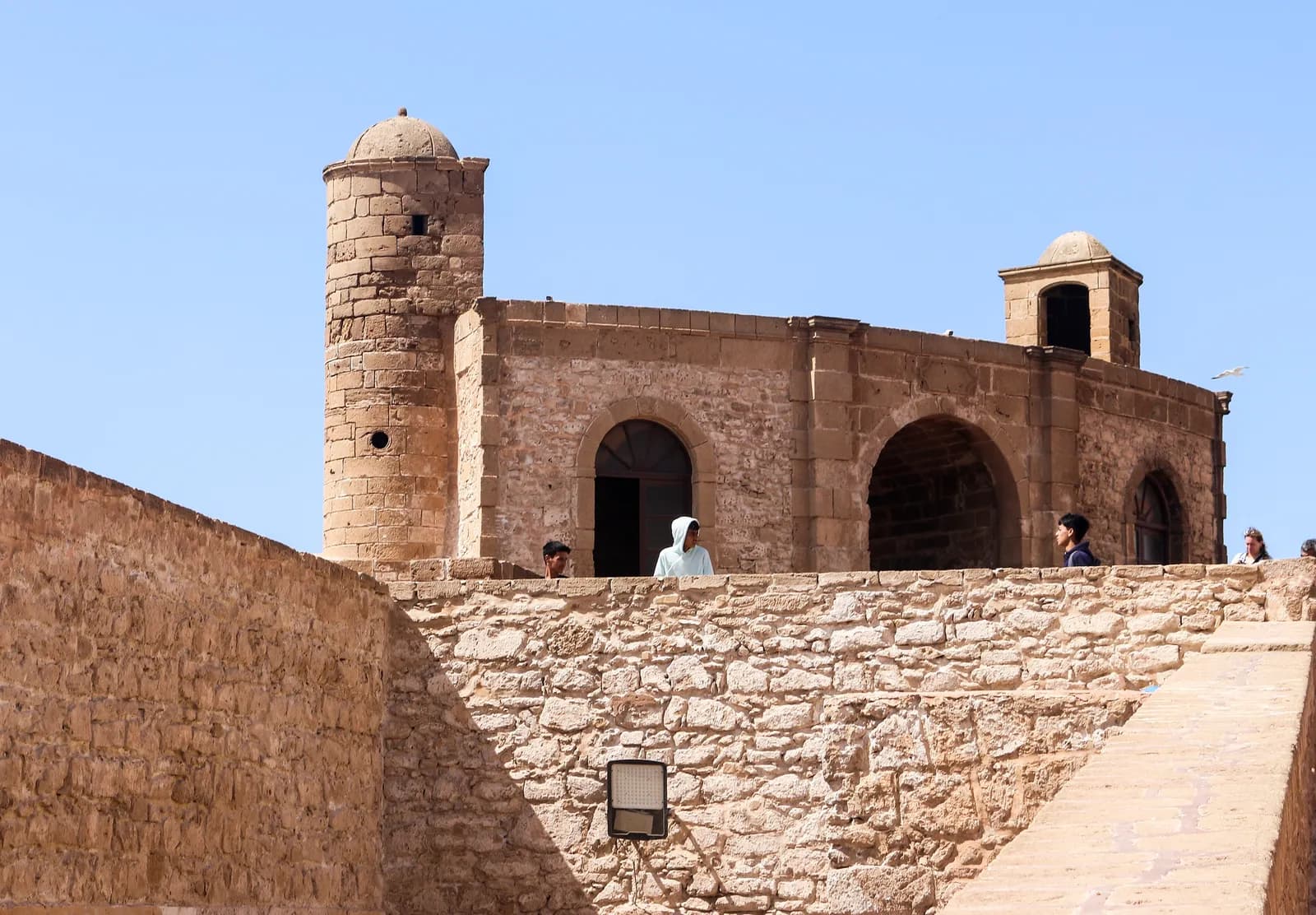
Essaouira’s landmarks are not really separate sights. They are one 18th-century fortified enceinte, and half a day walks the whole of it. The Skala de la Ville and its rampart walk, the Skala du Port with its two right-angled wings. Then the medina gates, two synagogues and the kasbah. Only one of them charges admission.
The Skala du Port is the section’s only ticket. It costs 60 MAD for a foreign adult, 30 MAD for a Moroccan adult or resident (Ministry of Culture ticketing portal, read 16 October 2026). The rest is free to walk: ramparts, gates, kasbah.
A town drawn in one go, in 1765
Essaouira’s medina did not grow. It was drawn. Sultan Sidi Mohammed ben Abdallah founded the present town in 1765. He gave the plan to Théodore Cornut, a French military engineer from Avignon who took Vauban’s ramparts at Saint-Malo as his model. Hence the straight streets, rare in a medina, and bastions sized for artillery rather than for ornament. The medina has been on the UNESCO World Heritage List since December 2001.
Our view: look for the logic rather than the picture. Note which way the cannon point and the town explains itself. It was built to hold an open Atlantic roadstead, not to guard against the interior.
The order to walk them in
Start at the Skala du Port when it opens. The light comes from the east and the coach groups only arrive late morning. Its two wings are 200 m long each, according to the Ministry of Culture’s ticketing portal. Head up to the Skala de la Ville through the Porte de la Marine: 500 m and 7 minutes on foot to Bab Skala, by our route calculation. The rampart walk is free, with its row of cannon. Under the vaults sit the thuya marquetry workshops we list under Crafts & shopping.
Finish with the synagogues. Bayt Dakira, in the former Slat Attia synagogue, is 240 m from Bab Skala. Slat Lkahal, the community synagogue, stands in the mellah at the north end of the medina, 640 m and 9 minutes on foot from Bab Skala by our route calculation. Bayt Dakira belongs to our Museums & galleries section, which tracks its current state.
Two things set the hour you go: wind and crowds. From April to September the northerly wind picks up in the afternoon and the rampart walk turns uncomfortable. Our Weather & wind pages give the day’s strength in knots. We prefer the late afternoon for the light, crowds and all.
If it rains, or you only have an hour
One hour only: the Skala de la Ville at the end of the day, which is free. With children: the Skala du Port and its cannon, then the port below. A wet day: the mellah, then the indoor places in our Museums & galleries section. A full day: one of our Itineraries, which strings together ramparts, port and beach.
We have not yet surveyed the steps and handrails on the ramparts. If walking is hard for you, ask at the Skala du Port entrance before you pay. For the quarters these walls enclose, the medina, the kasbah and the mellah, read our Neighbourhoods pages.
Pages in this section
Landmark
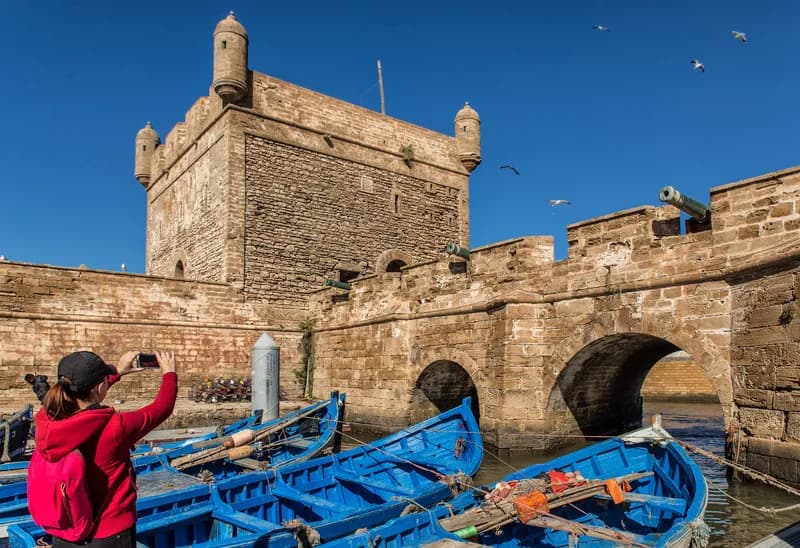
Skala du Port
Skala du Port entry: 60 MAD for a foreign adult, 30 MAD for a foreign child aged 7 to 13. Moroccans and residents pay 30 and 10 MAD, and Moroccans get in free on Fridays (Ministry of Culture, read 17 October 2026). No hours are published for the site itself: the portal gives 09:00–17:00 for all its sites.
Port
Landmark
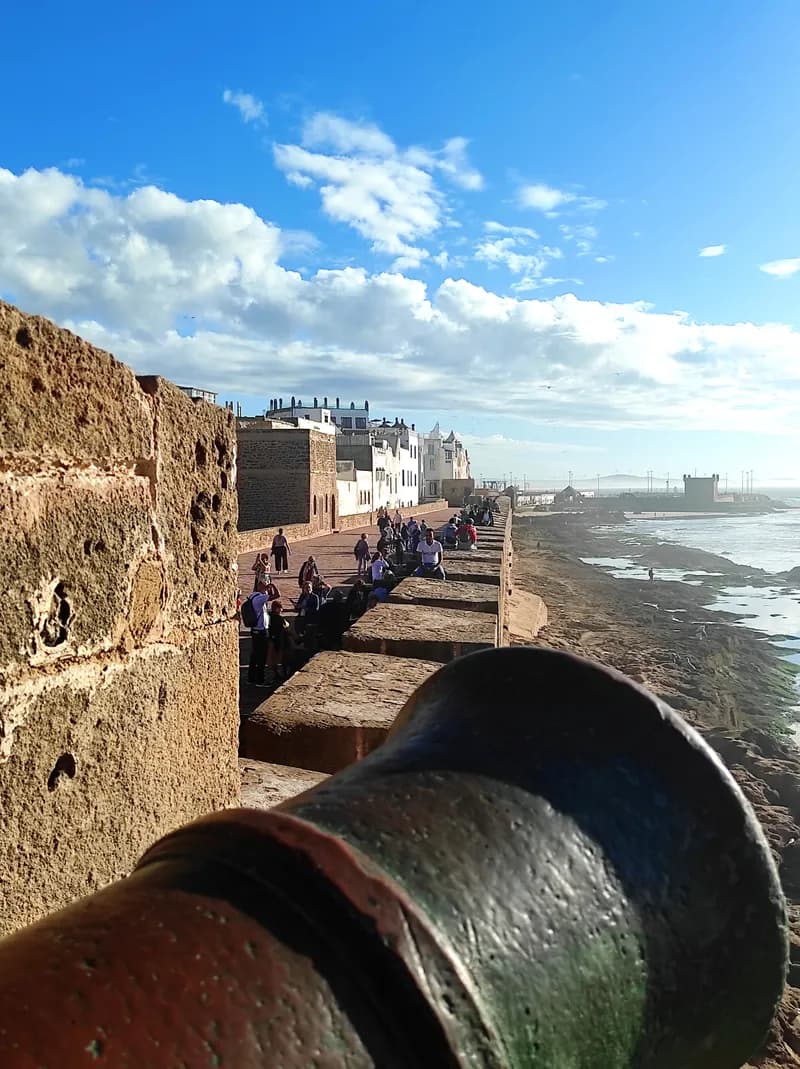
Skala de la Ville
The Skala de la Ville, the gun terrace on the medina’s north-west edge, publishes no hours and no price. The 60 MAD ticket on the culture ministry’s portal is for the Skala du Port only. The sun sets there at 17:40 on 21 December and 19:47 on 21 June, GMT.
Kasbah
Landmark
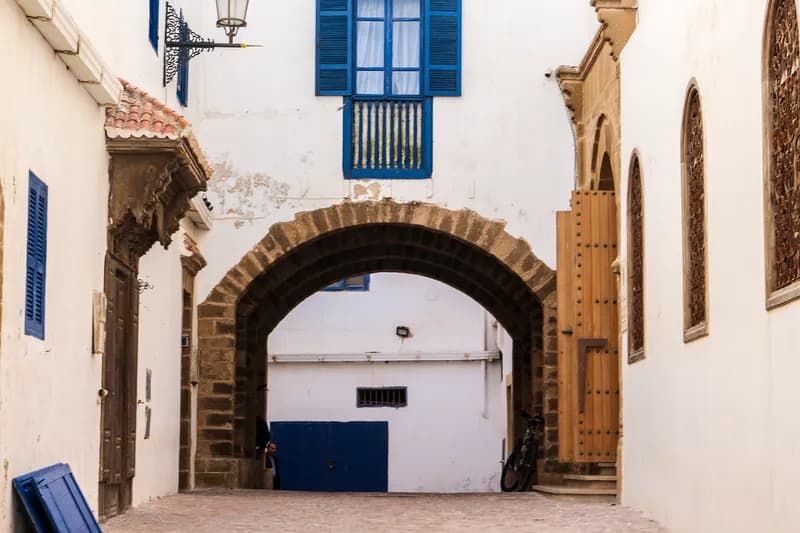
Médina d’Essaouira (site UNESCO)
Essaouira’s medina has been on UNESCO’s World Heritage List since December 2001 (property no. 753, criteria (ii) and (iv)). The property covers 56.7 ha in two parts, the medina and the islands. UNESCO listed its 18th-century fortified port plan. In 2025 the Committee raised concern over the Mellah and asked Morocco for a report by 1 December 2026.
Medina
Landmark
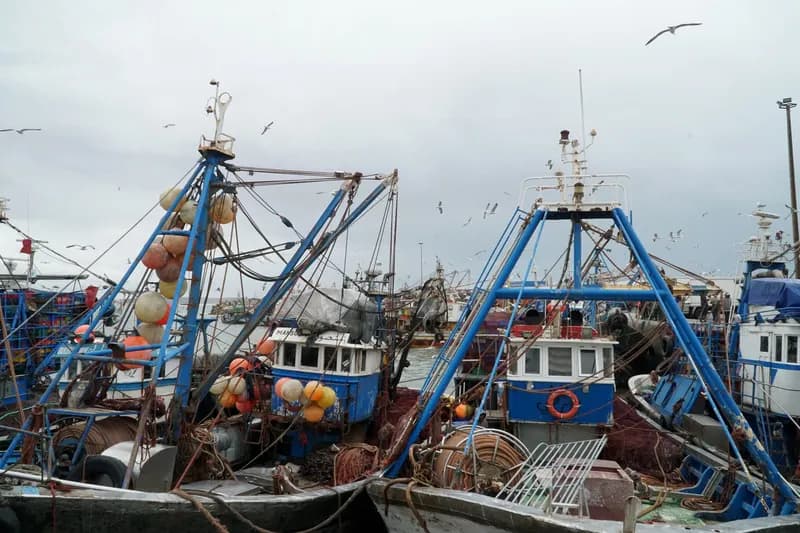
Port de pêche d’Essaouira
Essaouira’s fishing port is a workplace, not a visitor site: the National Ports Agency publishes no hours and no ticket for it. It landed 4,572 tonnes from January to the end of April 2026, up 26% year on year (ONP). No official source gives the time of the fish auction. Our advice: an hour, in the morning.
Port
Landmark
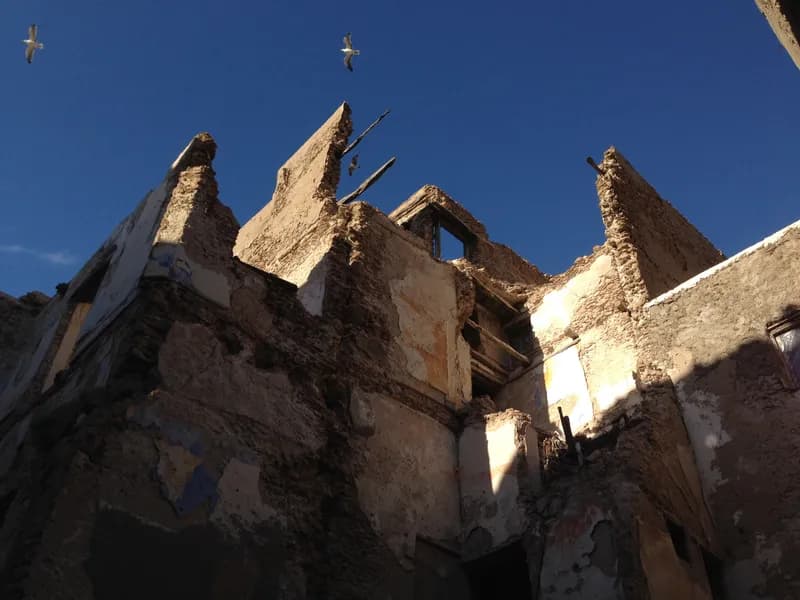
Mellah d’Essaouira
The Mellah, the former Jewish quarter in the north of the medina, dates from 1804 and Sultan Moulay Slimane, according to the town’s 2012 map-guide. In 2025 UNESCO voiced concern at its decay and asked Morocco for a rehabilitation strategy, reporting by 1 December 2026. No plan for its houses had been published by 16 October 2026.
Mellah
Landmark
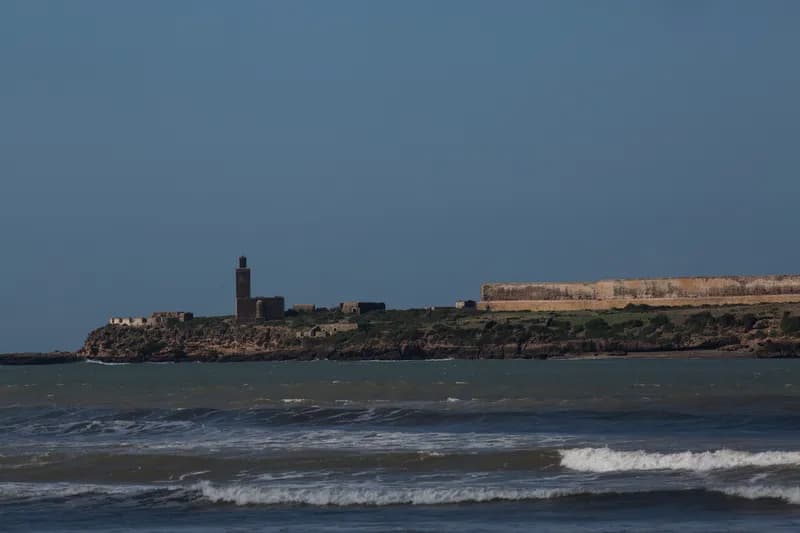
Île de Mogador
Mogador Island is closed to visitors. A permanent biological reserve since 1980, it bars all landings except by a few registered fishermen. You watch it from the Skala du Port, 1.9 km away as the crow flies, or from the beach. Around 1,500 pairs of Eleonora’s falcons breed there each summer (GREPOM, 2018–2021).
Essaouira bay (beach)
Landmark
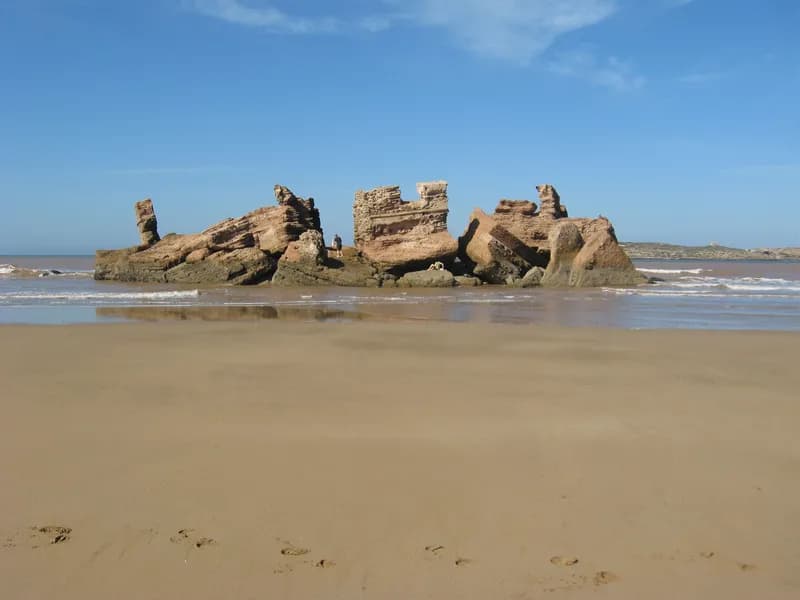
Diabat, le village et le Bordj El Berod
Bordj El Berod, Borj Al-Baroud in the culture ministry’s inventory, is a ruined 18th-century fort on the beach at Diabat. It stands 1.4 km from the village as the crow flies, facing Mogador island. Legend says Jimi Hendrix wrote “Castles Made of Sand” here, yet the song came out before his 1969 visit.
Diabat
Landmark
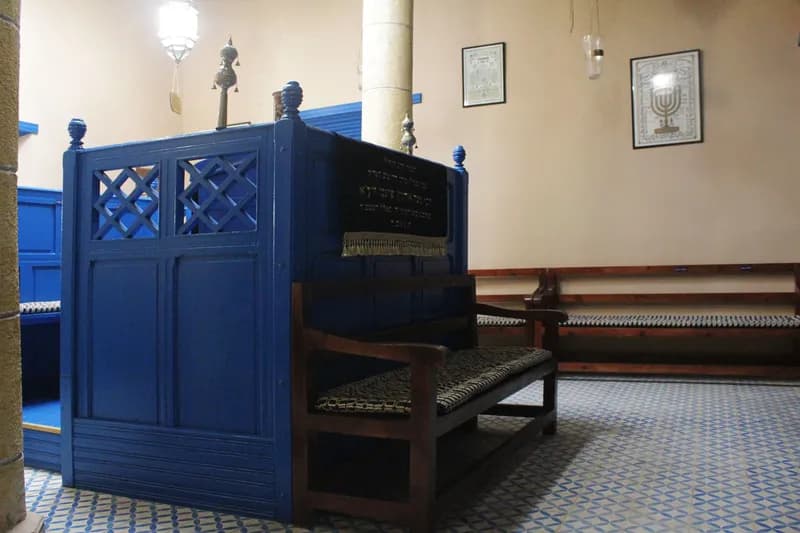
Synagogue Haïm Pinto
The Haïm Pinto synagogue is in the rabbi’s former house in the mellah, 60 m from Slat Lkahal. As of 17 October 2026, nobody publishes its opening hours or a price. Save its coordinates before you set off: 31.515953, −9.767328. The next hiloula, on 26 Elul, falls on 28 September 2027.
Mellah
Landmark
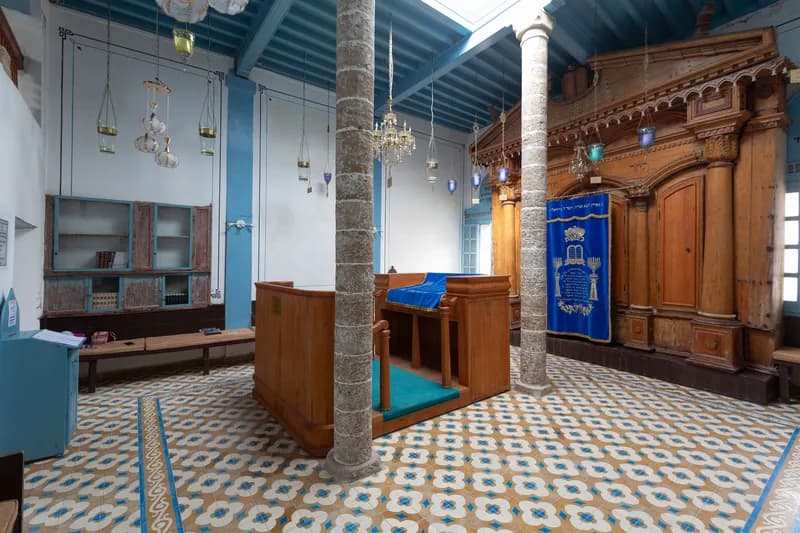
Synagogue Slat Lkahal
Slat Lkahal, the community synagogue, has stood over a vaulted passage since the 1850s, at number 119 on the mellah’s main street, 3 minutes’ walk from Bab Doukkala. The association that has been restoring it since 2011 publishes no hours and no prices, so write to it before you go.
Mellah
Landmark
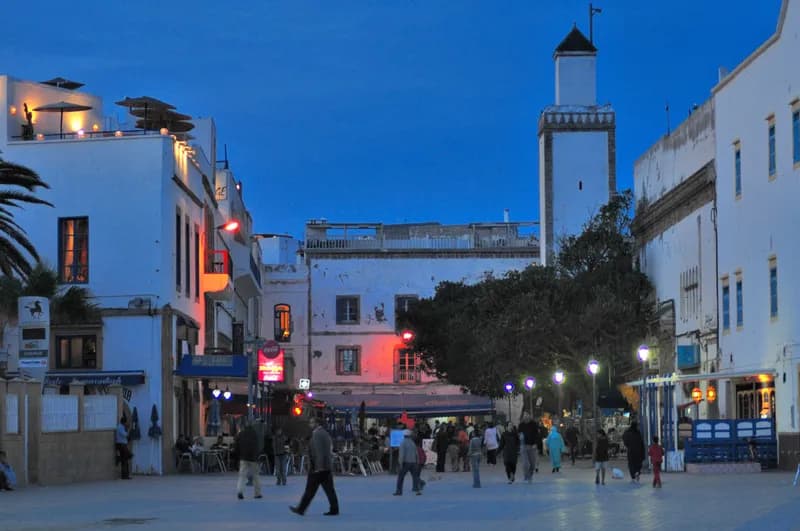
Place Moulay Hassan
Place Moulay Hassan is the pedestrian square between Essaouira’s medina and its port, free and open at any hour. Terraces line it, and the Skala du Port is 250 m away on foot. In late June it holds the Gnaoua Festival’s main stage: the 2026 edition opened on 25 June, and the next runs 24 to 26 June 2027.
Kasbah
Landmark
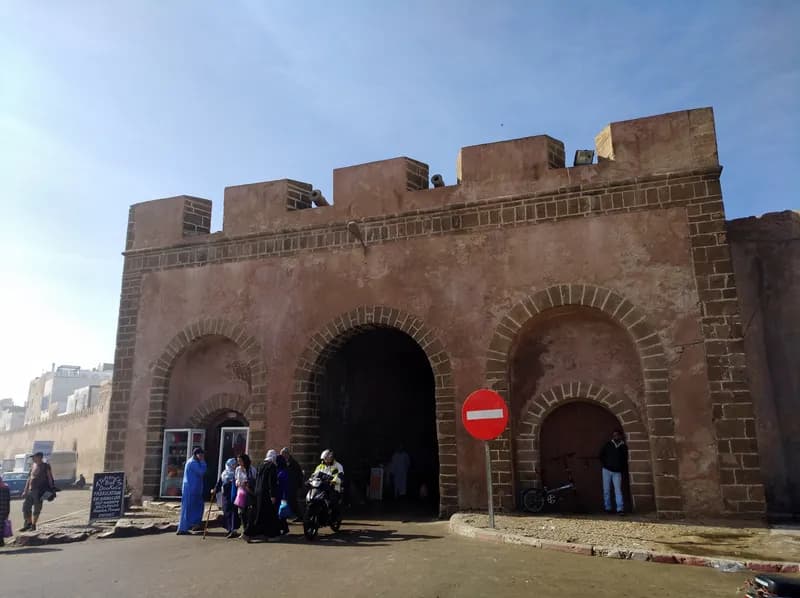
Bab Doukkala
Bab Doukkala, the medina’s north-east gate, is where grand taxis leave for Sidi Kaouki, Had Draa and Marrakech. The bus station is 725 m away, a 10-minute walk, but CTM and Supratours coaches stop elsewhere. Free to walk through: allow five to ten minutes.
Medina
Landmark
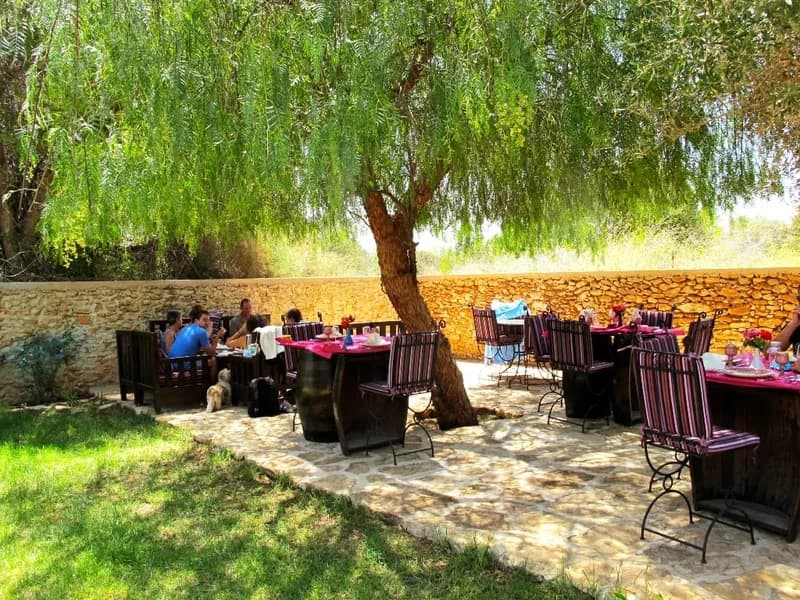
Domaine du Val d’Argan
Domaine du Val d’Argan, a vineyard planted in 1994 some 28 km from Essaouira on the Marrakech road, no longer publishes hours or prices. Its website expired in August 2023, and on 16 October 2026 the domain name was up for sale. Tastings, lunch and guest rooms were on offer in 2023: phone before you drive out.
Ounagha & Val d’Argan
Frequently asked questions
Do you have to pay to walk Essaouira’s ramparts?
No, except at the Skala du Port. It costs 60 MAD for a foreign adult, 30 MAD for a Moroccan adult or resident (Ministry of Culture ticketing portal, read 16 October 2026). Elsewhere the Skala de la Ville, the gates and the kasbah lanes are free.
How long do Essaouira’s landmarks take?
Half a day covers all of them at your own pace. The walking itself is short: from the Skala du Port to Slat Lkahal in the mellah is 1.1 km, a quarter of an hour without stopping, by our route calculation. With one hour to spare, keep the Skala de la Ville for the end of the day.
Which skala should you see first?
The Skala du Port first, at opening time, while the light comes from the east and the groups have not arrived. The Skala de la Ville after that, or in the late afternoon if crowds do not bother you.
Can you visit Essaouira’s synagogues?
Yes, both Slat Lkahal and Bayt Dakira are open to visitors. As of 16 October 2026 neither publishes opening hours on an official site, so check on the spot, above all on a Saturday, the Sabbath. The current state of Bayt Dakira is tracked in our Museums & galleries section.
Why do the ramparts look like European fortifications?
Because they are. The town plan was given in 1765 to Théodore Cornut, a French military engineer from Avignon who took Vauban’s ramparts at Saint-Malo as his model. The bastions were drawn for the artillery of their century, not for the look of them.