Crafts & shopping
Essaouira really makes five things: thuya marquetry, argan oil, raffia, silver and painting. How to tell solid wood from veneer and a registered cooperative from a roadside stall, how to haggle, and what the law forbids you to take out of the country.
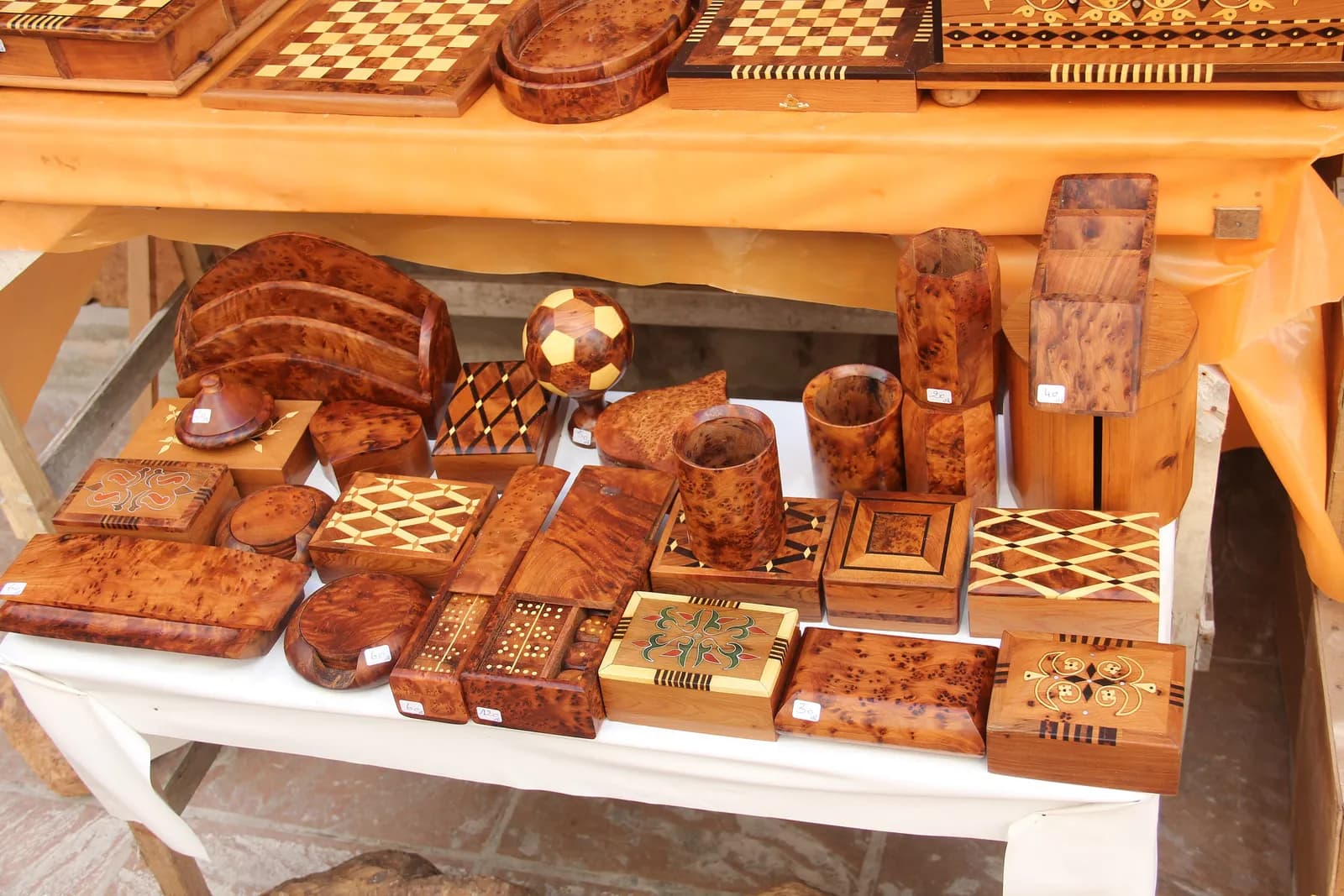
Essaouira really makes five things: thuya marquetry, argan oil, raffia, silver and a school of painting born here. Our advice: buy first what the town makes. This page tells you how to recognise it, and how to buy it.
The marquetry makers work under the arcades of the Skala de la Ville and along avenue Oqba Ibn Nafiaa. Most argan cooperatives sit outside the walls, on the Marrakech road.
Solid thuya, or veneer
Thuya, arar in Arabic, grows in the forest around the town. Turn the box over first. On a solid piece the grain runs on round the edge and across the base, and the object is heavy for its size. A veneer stops dead at the corner, and the base is bare or covered in felt.
Burr thuya, the rippled wood kept for lids, does not turn up on a 40 MAD object. Our advice: open and close the box three times before you pay. A lid that sticks in the workshop will stick at home.
A cooperative is a legal status, not a sign
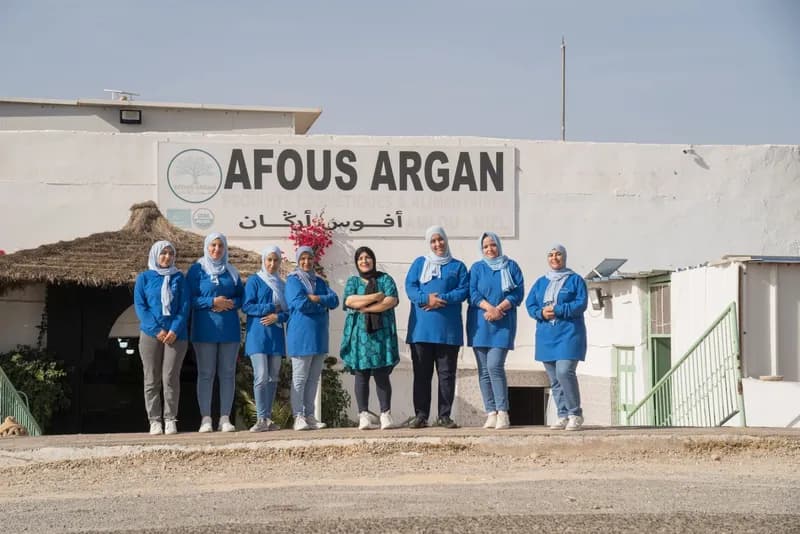
In Morocco a cooperative is registered, not self-declared. Law 112-12 of 21 November 2014 requires entry in the cooperative register, and every cooperative holds a registration number. Ask for it, it is on the wall or handed over without fuss.
In a real cooperative you see the work before the till: nuts cracked against a stone, the mill turning, fruit drying outside. The argan tree, its practices and know-how have been on UNESCO’s Representative List of the Intangible Cultural Heritage since 2014. A roadside stop where three jerrycans wait under an awning, with nobody working, is a sales point.
Smell the oil first: culinary argan oil is brown and plainly nutty, cosmetic oil pale and almost odourless. Oil sold as cosmetic that smells toasted is culinary oil at a higher price.
Price, hallmark, and what may not leave
Nothing is priced and the first figure is not the price. Haggling is the norm, without theatre: name your price once, then hold to it. Our advice: ask the price of the same object in two shops before you haggle in a third.
Silver is sold by weight: look for the hallmark, have the piece weighed in front of you, ask the price per gram. Without a hallmark nothing vouches for the metal, whatever the piece is called. Carry cash, and our Money & payments section says where to withdraw it.
A newly made craft object leaves Morocco with no formality. The law does forbid taking out of the country any movable object listed or classified as heritage, and any work of art or antiquity of historical or archaeological interest to Morocco. Only a temporary export can be authorised, for an exhibition, a restoration or study. Faced with an ‘old Berber chest’, ask how old it is and where it comes from before you pay. The same goes for hawksbill tortoiseshell (CITES Appendix I), live chameleons (Appendix II) and reptiles such as the desert monitor (Appendix I): without a CITES permit, they do not leave the country.
For painting, walk the galleries in our Museums & galleries section before buying a canvas near the port. A quarter of an hour in front of hung work teaches you to recognise a hand. The Had Draa souk and the markets are in Markets & souks, the cooperatives outside the walls in our Day trips. Our neighbourhood pages place the Skala and the mellah.
Frequently asked questions
What should I buy in Essaouira?
What the town actually makes. A solid thuya box or tray, argan oil bought at a cooperative, raffia basketwork, a silver piece weighed in front of you, a canvas from the local painting scene. Rugs, leather slippers and lanterns are not on that list: ask where they were made.
How do I tell real thuya from veneer?
Turn the object over. On a solid piece the grain runs on round the edge and across the base, and the object is heavy for its size. A veneer stops dead at the corner and hides the underside under felt or stain.
Where can I buy argan oil without being had?
At a cooperative where the work is visible and which will give you its number in the cooperative register, required since law 112-12 of 2014. Culinary oil is brown and smells of roasted nuts, cosmetic oil is pale and almost odourless, so oil sold as cosmetic that smells toasted is not.
Do you haggle in Essaouira’s souks?
Yes, nothing is priced and the first figure quoted is not the price. Say once what you are willing to pay and hold to it, without escalation and without aggression. Ask the price of the same object in two shops before you start.
Can I take what I buy out of Morocco?
Newly made crafts leave with no formality. The law forbids the export of objects listed or classified as heritage and of works of art or antiquities of historical or archaeological interest, except under a temporary authorisation. Hawksbill tortoiseshell, live chameleons and reptiles such as the desert monitor fall under CITES and do not leave without a permit.