Health & safety
Essaouira is a safe town. The real risk is the ocean: rip currents, cold water, a wind that pushes anything afloat out to sea. Lifeguards in summer, in the bay only. A private clinic has run 24-hour emergencies since July 2024, and works are announced at the public hospital. Police 19, gendarmerie 177, fire 15.
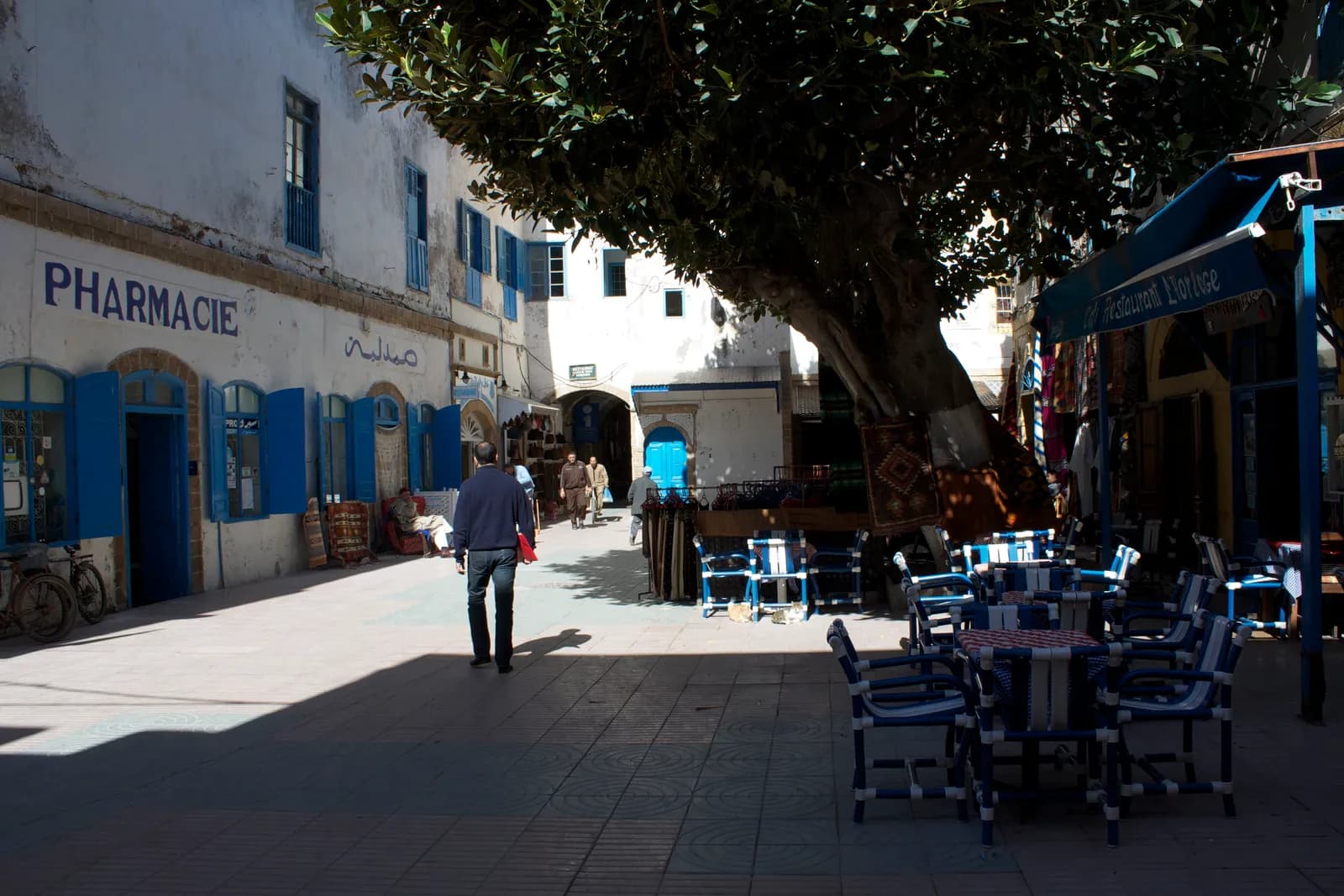
Essaouira is a safe town, and that is not what this page is about. What sends visitors to A&E here is the ocean. Rip currents on the open beaches, water that stays cold all year, a wind that carries anything afloat out to sea. The rest comes down to three precautions: the scooter, your bag in the souk on festival days, the sun the wind makes you forget. For treatment, the answer changed on 4 July 2024: a private clinic with a 24-hour emergency department opened in town.
The ocean first: currents, cold, wind
The bay is patrolled in summer only, by the Protection civile’s seasonal lifeguards. We found no official patrol hours, so ask at the post before you go in. Outside patrol hours, nobody is coming to get you. At Sidi Kaouki and Moulay Bouzerktoune, nobody ever is. Our rule: swim in front of the lifeguard post, never alone, and get out as soon as you feel cold.
A rip current can be read from the sand: a band of darker, smoother water with no foam, cutting through the line of breaking waves. That is water heading back out, faster than a swimmer. If it takes you, do not fight it: swim along the beach until you are back among the breaking waves, then let them bring you in.
The water never really warms up, and our beaches pages give the degrees season by season. Without a wetsuit, cramp arrives before tiredness. From April to August the trade wind strengthens every afternoon. It carries an inflatable mattress, a paddleboard or a beginner’s kite along the bay and then out to sea in minutes. If you are a beginner, stay with the school: our kitesurfing section says which water suits which level.
In town: scooters, the souk, the sun
On a scooter, three traps: sand on the Diabat road, loose gravel on the N1, hired helmets rarely in the right size. Hire with a helmet that fastens, your licence, and insurance you have read as far as the accident clause. Our advice: for Sidi Kaouki, the grand taxi from Bab Doukkala costs less and does not fall over. Getting around explains how to take one.
In the medina, theft means pickpocketing, not assault, concentrated on the crowded days: Gnaoua festival week in late June, and August evenings. Bag closed and in front of you in the souk, phone out of the back pocket, passport at the riad. The “guide” at Bab Doukkala who tells you your riad has closed is after a tip: a calm no is enough. Each edition’s dates are in our festivals section.
The wind keeps your skin cool, and sunburn arrives without any feeling of heat. On the beach between 12:00 and 16:00: sunscreen, a hat that ties on, water.
Pharmacies, the clinic, the hospital, the numbers
We found no official opening hours for Essaouira’s pharmacies. At night, on Sundays and on public holidays a duty pharmacy takes over, and the weekly rota is posted on every pharmacy door.
For an emergency, two addresses. The Clinique Internationale de Mogador, avenue Mohamed V, opened on 4 July 2024. Its emergency department is open 24 hours a day, seven days a week, tel. 05 24 47 80 80 (clinic website, read on 16 October 2026). It is private: the bill is settled before you leave, and your travel insurance reimburses you afterwards. The public hospital is the Centre hospitalier provincial Sidi Mohammed Ben Abdellah. On 20 July 2026 the Ministry of Health announced rehabilitation and extension works there, due to start in July 2026 and last about eight months. Its number, according to France Diplomatie on 15 September 2026: 05 24 47 27 16.
The numbers, as France Diplomatie publishes them on 15 September 2026: police 19 in town, Gendarmerie royale 177 outside built-up areas, fire brigade and Protection civile 15. The French embassy adds the SAMU on 141, and 112 works from a mobile. If your stay runs to months, GPs and health cover are in Living in Essaouira.
Frequently asked questions
Is Essaouira safe?
Yes. Theft here means pickpocketing on crowded days, not assault, and we walk the medina at any hour. The real risk is the ocean: currents, cold water, wind. Read the paragraph on rip currents before you go in.
How do you spot a rip current on an Essaouira beach?
A band of darker, smoother water with no foam, cutting through the line of breaking waves. If it carries you out, swim along the beach until you reach the breaking waves, never against the current, then let them bring you in.
Where is the emergency department in Essaouira?
At the Clinique Internationale de Mogador, avenue Mohamed V, open 24 hours, tel. 05 24 47 80 80 (clinic website, read on 16 October 2026). The bill is settled before you leave. The public Sidi Mohammed Ben Abdellah hospital is the other address, where the Ministry of Health announced about eight months of works from July 2026.
What are the emergency numbers in Morocco?
Police 19 in town, Gendarmerie royale 177 outside built-up areas, fire brigade and Protection civile 15, according to France Diplomatie on 15 September 2026. The SAMU answers on 141 and 112 works from a mobile. Calls are free.
How do you find the duty pharmacy in Essaouira?
The weekly rota is posted on every pharmacy door, with the address and phone number of the one on duty. Outside opening hours, look for the lit green cross, or phone before crossing town.
This section is filling up
No page is online in this section yet. In the meantime, here is what is already published in “Guides”.
Other sections in Guides
- Getting to EssaouiraThere is no train to Essaouira: the 175 km from Marrakech are done by road. A CTM or Supratours coach takes 3 hours for 100 to 125 MAD (fares read on 16 October 2026), a car about 2 h 45. Mogador airport (ESU) is 17 km out, on seasonal routes.
- Distances & travel times from EssaouiraRoad distance, drive time, one option without a car and a day-trip verdict for 25 destinations from Essaouira, Diabat to Tangier. A ≈ marks a figure we have not checked yet. A figure without it carries its source and the date we verified it.
- Getting aroundThe medina is closed to cars and crosses on foot in about ten minutes, by our calculation: most visitors need no vehicle at all. Petit taxi for the new town, grand taxi or local bus for Sidi Kaouki and the villages, a bike for the bay, guarded car parks outside the walls.
- When to visitSeptember and October for the town, April to August for the wind. Essaouira records 147 days a year above 15 knots and its monthly mean highs never pass 23 °C. This section gives the climate month by month, the festivals and the crowds, from the 1991-2020 normals.
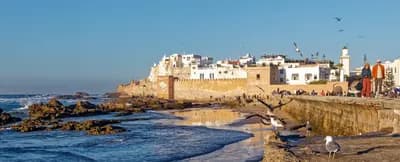
- BudgetThe bed sets the cost of a day in Essaouira, not the food. For a November 2026 night in the medina, a dorm bed runs 85 to 200 MAD, a double in a plain riad 360 to 440 MAD, a smarter riad 900 MAD and up. The bus from Marrakech costs 100 to 125 MAD.
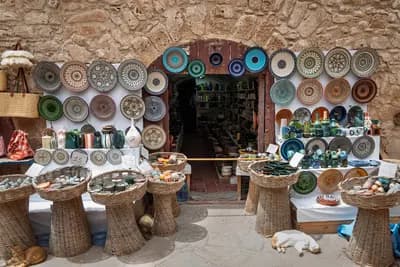
- Money & paymentsCash first in Essaouira: the port stands, taxis, souks and small dining rooms take dirham notes only. Withdraw on arrival, in one go and in daylight, at the machines in the medina or on boulevard de la Corniche. At a card terminal, pay in dirhams. For Gnaoua, 24 to 26 June 2027, withdraw before it opens.
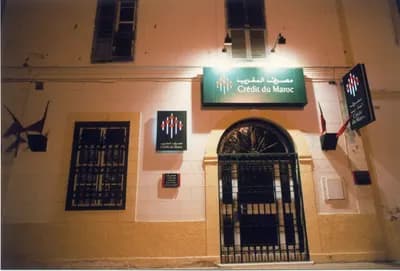
- Internet & SIM cardsBuy a local SIM on arrival, passport in hand, from Maroc Telecom, Orange or inwi. At Orange the card costs 20 MAD and 50 MAD buys 11 GB for 30 days on promotion (October 2026). 4G across town, 5G in Essaouira according to Orange. A coworking space in the medina for meetings.
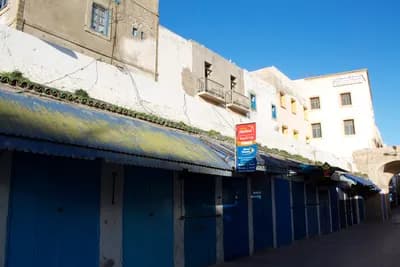
- Living in EssaouiraA month or a year in Essaouira comes down to four things. A lease in the new town, best looked for between October and March. Three months without a permit, then the residence card from the police. Wind above 15 knots on 147 days a year. And a single French school, 65 pupils. What is missing, we say.
The agenda and the wind, every month
One email a month, and you will know when this section opens.