Cafés & breakfast
A Moroccan breakfast is msemen, baghrir or harcha with honey, olive oil or amlou, and a nous-nous or a tea. Your riad serves it: ask whether it is in the room rate. The port opens first, then the medina, and the new town serves all year round. A laptop is fine in the morning, indoors, never on the square.
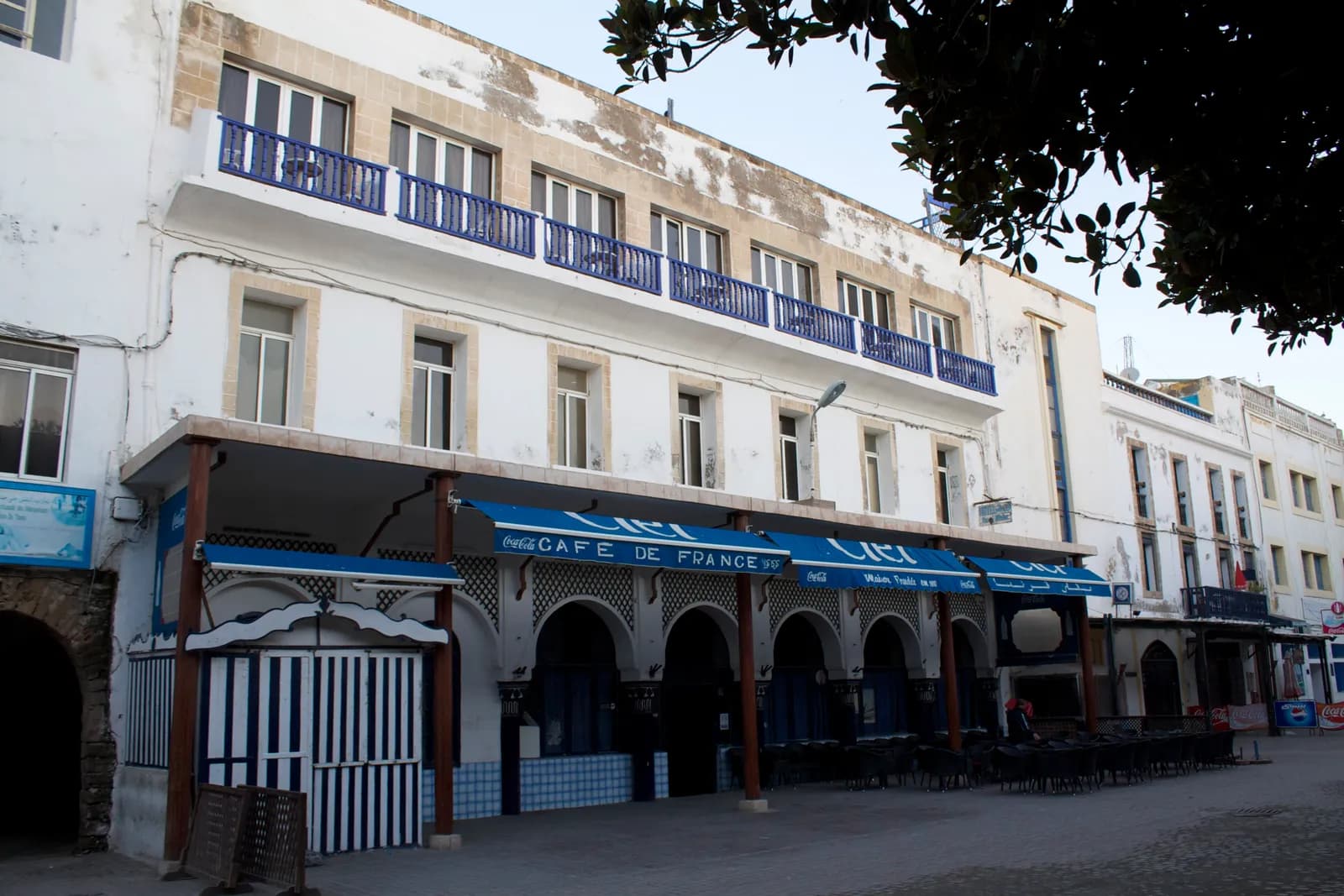
A Moroccan breakfast is three flatbreads and two pots. Msemen, baghrir or harcha, with honey, olive oil or amlou, and a coffee or a mint tea. Sitting down, the Moroccan set breakfast is 65 MAD at Café Cleopatra on avenue Princesse Lalla Amina and 120 MAD at Océan Vagabond on the beach (menus read on 16 October 2026). On its own, a café au lait is 15 MAD and a black coffee 10 MAD at Café Restaurant Bissmillah on rue Qadisiya (menu read the same day). Your riad already serves this breakfast: ask when you book whether it is in the room rate. So the morning café is a second cup, or the real meal for anyone sleeping in an apartment.
What is on the plate
Msemen is a square of layered dough, folded and cooked on a griddle, oily and crisp. Baghrir is the thousand-hole pancake, soft, and it drinks honey. Harcha is a semolina griddle cake, dry and crumbly, at its best with fresh cheese. Alongside come butter, honey, olive oil, sometimes jben, a fresh cheese, and a fried egg if you ask.
Amlou is the region’s own spread: roasted almonds, argan oil and honey, ground to the texture of peanut butter. Essaouira sits inside the Arganeraie biosphere reserve, designated by UNESCO in 1998 and covering close to 2.5 million hectares (UNESCO, read on 25 September 2026). It takes about 150 kg of fruit to make 3 litres of oil (UN, International Day of Argania, 10 May). That is why it costs what it does. Our argan cooperatives pages say where to buy it. In a café, just ask whether it is made in house.
Coffee is ordered as a nous-nous, half coffee and half milk, in a glass. Mint tea arrives very sweet: “chwiya sukkar”, little sugar, is understood everywhere. Fresh orange juice is the third morning drink. The stalls that sell it by the glass, like the pavement msemen, are in our street food section.
Three cafés, three hours
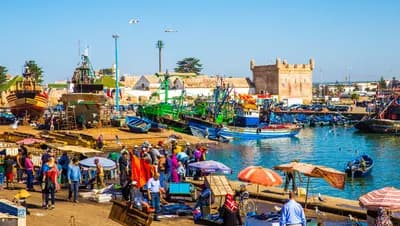
The port opens first. Around the Skala du Port and the fish auction, the fishermen’s cafés serve coffee and tea, nothing to eat. It is the best coffee in town in the literal sense: the hour, the light on the blue boats, the gulls. Buy a msemen from a stall on the way and bring it with you.
The medina takes over next. The terraces on the square and along rue Sidi Mohamed Ben Abdallah serve the visitors’ breakfast. Omelette, pancakes and juice. Our restaurants pages have already said what the square costs per square metre. For the morning it is the right moment, before the crowd and before the wind. Between Bab Doukkala and the square, the tea rooms on avenue de l’Istiqlal sell gazelle horns and chebakia.
The new town feeds the people who live here. In the morning, its bakeries and pastry shops line up msemen, harcha and croissants on the counter. Our observation: in the morning, the neighbourhood café is still a room of men. A woman on her own is served without comment, but the terrace is more mixed than the room, and the pastry shop more than the café.
Working on a laptop
Yes, in the morning and indoors. The wind gets up after midday and makes the terraces useless for a screen, sand included. Sockets are rare, so charge before you come. Wifi exists almost everywhere, ask for the code. The 4G on a local SIM is often steadier, and our internet and SIM guide compares the operators and the coworking spaces. The fair rent is one order every hour and a half, and the table handed back before lunch service. Do not work on the square’s terraces: you are paying for the passing crowd there.
During Ramadan most cafés close for the day and reopen after sunset. What the month does to the rest of the day is on our eat and drink page. The dates are in our when to visit guide.
Frequently asked questions
What is a Moroccan breakfast?
Griddle breads, msemen, baghrir or harcha, with honey, olive oil or amlou, and a nous-nous coffee or a mint tea. Sitting down, the Moroccan set breakfast is 65 MAD at Cleopatra and 120 MAD at Océan Vagabond (menus read on 16 October 2026). A fried egg and a fresh orange juice come on request.
What is amlou?
A spread of roasted almonds, argan oil and honey, eaten on msemen. Essaouira lies inside the Arganeraie biosphere reserve (UNESCO, 1998), and about 150 kg of fruit go into 3 litres of oil (UN). That is why it costs what it does.
How much is a coffee in Essaouira?
At Café Restaurant Bissmillah on rue Qadisiya, a black coffee is 10 MAD and a café au lait 15 MAD (menu read on 16 October 2026). On a terrace on Place Moulay Hassan, you are paying for the seat as well.
Where should you have breakfast in Essaouira?
At the port, the first to open, for a coffee with nothing to eat. In the medina, for the visitors’ breakfast on the terraces. Or in a new-town pastry shop, for a msemen or a harcha at the counter. Your riad already serves it: ask whether it is in the room rate.
Can you work on a laptop in a café in Essaouira?
Yes, in the morning and indoors: the afternoon wind makes the terraces useless for a screen. Sockets are rare, wifi on request, local 4G often steadier. Order every hour and a half and give the table back before noon.
This section is filling up
No page is online in this section yet. In the meantime, here is what is already published in “Eat & drink”.
Other sections in Eat & drink
- RestaurantsFour ways of eating in Essaouira. The port grills sell by weight. The small medina rooms serve a tagine for 50 to 90 MAD. The Place Moulay Hassan terraces charge for the view, and the new town cooks for its residents. Pick the neighbourhood and the hour before the name.
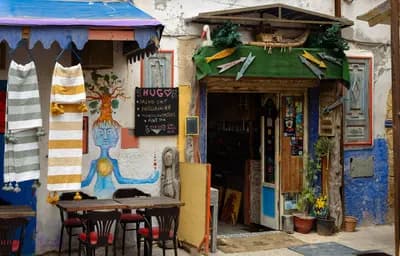
- Bars & rooftopsAlcohol in Essaouira is served under licence, and licences are scarce: a few kasbah rooftops, some medina restaurants, the hotel bars on the bay. On four menus published online, a Casablanca beer costs 45 to 80 MAD. In summer go up at 19:00, not 17:00: the wind drops with the sun.
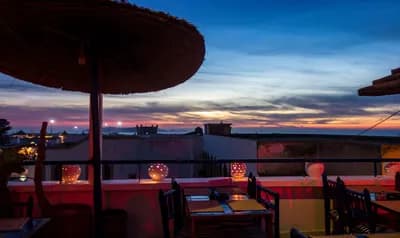
- Clubs & nightlifeClubs, beach clubs and parties: Essaouira after dark.
- Street foodEating on your feet in Essaouira rarely costs more than 30 MAD a plate. Sfenj and msemen in the morning, pavement sardines at midday, a bowl of snails at dusk, orange juice at any hour. One rule against a bad stomach: what comes off the fire in front of you, at the stall with the queue.
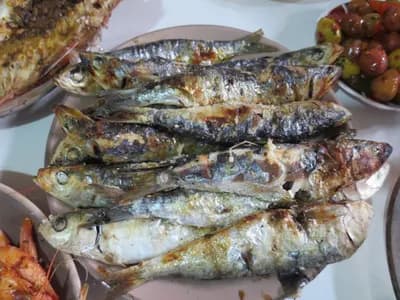
- Fish marketAt the port you buy fish from the display, by the kilo, and have it grilled next door. Kilo price and cooking charge agreed before the weighing, fish drained, no ice. We found no published prices: ask before you sit down. The best buy is sardines, the worst deal lobster on ice.
The agenda and the wind, every month
One email a month, and you will know when this section opens.